- Region:
- World
- Category:
- Politics
Vice President JD Vance says negotiations collapsed after 21-hour meeting in Pakistan; future of 14-day ceasefire remains uncertain
![Vice President JD Vance says negotiations collapsed after 21-hour meeting in Pakistan; future of 14-day ceasefire remains uncertain]()
Vice President JD Vance says negotiations collapsed after 21-hour meeting in Pakistan; future of 14-day ceasefire remains uncertain
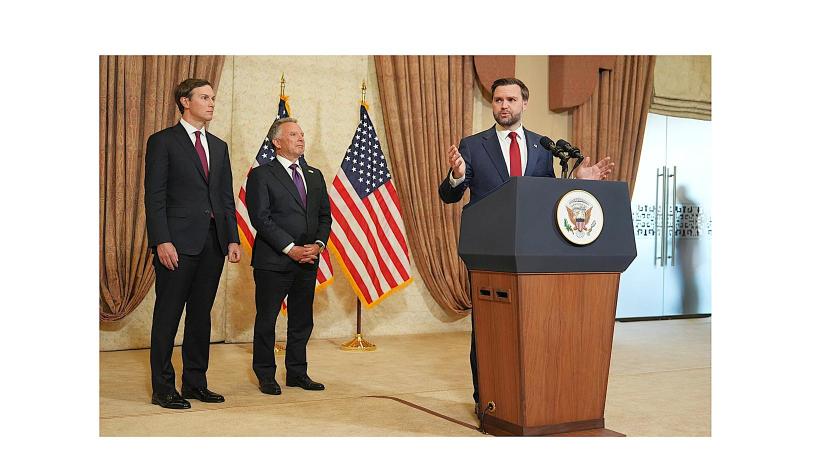
The United States and Iran ended high-level, face-to-face talks in Pakistan on Sunday without reaching an agreement, casting doubt over a fragile 14-day ceasefire set to expire on April 22.
U.S. Vice President JD Vance said the negotiations broke down after Washington presented what it described as its “final and best offer,” emphasizing that Iran failed to commit to abandoning any pathway toward developing a nuclear weapon.
“We need to see an affirmative commitment that they will not seek a nuclear weapon and will not pursue the tools to achieve one,” Vance said following the 21-hour marathon talks.
Iranian Parliament Speaker Mohammad Bagher Qalibaf, who led Tehran’s delegation, pushed back, stating that the United States had not earned Iran’s trust. Iranian officials blamed what they described as U.S. “overreach” on key unresolved issues.
Neither side disclosed specific sticking points, but both signaled that positions remain far apart, raising uncertainty about what will happen once the ceasefire expires.
Pakistani mediators urged both parties to maintain the truce, warning that a collapse could further destabilize the region.
The talks come amid heightened tensions following the conflict that erupted on February 28, involving the United States, Iran, and regional actors including Israel and Hezbollah. The war has already caused thousands of casualties and widespread infrastructure damage across multiple Middle Eastern countries.
Energy markets are also on edge. Iran’s control over the Strait of Hormuz has significantly restricted oil and gas flows from the Persian Gulf, driving global energy prices higher.
Iran has consistently denied pursuing nuclear weapons, insisting on its right to a civilian nuclear program. However, experts warn that its stockpile of enriched uranium is now only a short technical step away from weapons-grade capability.
With no agreement in place, the coming days are expected to be critical in determining whether diplomacy can resume or the conflict escalates further.