- Region:
- World
- Category:
- Politics
US, Ukraine and European Officials Hold Urgent Geneva Talks Over Trump’s 28-Point Peace Plan
-
![US, Ukraine and European Officials Hold Urgent Geneva Talks Over Trump’s 28-Point Peace Plan.]()
US, Ukraine and European Officials Hold Urgent Geneva Talks Over Trump’s 28-Point Peace Plan.
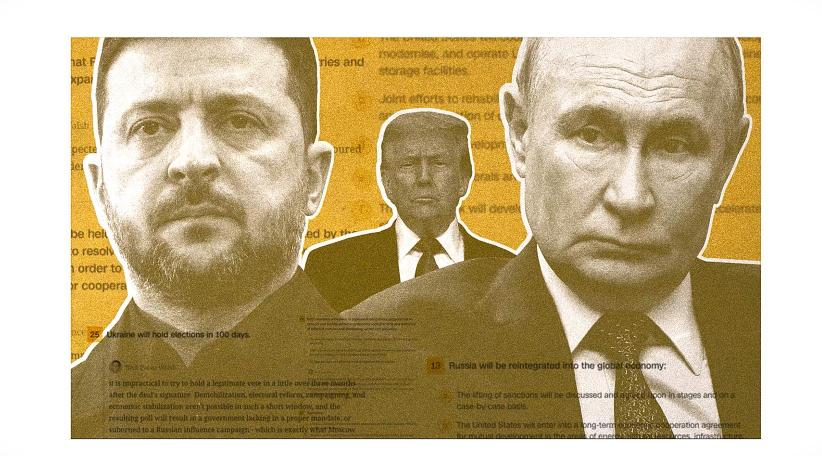
ABC Mundial, 23 November 2025 — GENEVA — High-stakes diplomacy unfolded in Geneva on Sunday as U.S., Ukrainian and European officials met behind closed doors to discuss a contentious 28-point peace proposal drafted in Washington. The plan, backed by Donald Trump, has stirred alarm in Kyiv and across European capitals for appearing to make sweeping concessions to Moscow.
Key Players and Stakes
Leading the U.S. delegation are Special Envoy Steve Witkoff and Secretary of State Marco Rubio, who arrived in Geneva for what Washington describes as final coordination over a possible peace deal. Also attending is U.S. Army Secretary Daniel Driscoll. On the Ukrainian side, the delegation is headed by Andriy Yermak, Chief of Staff to President Volodymyr Zelensky. European participation comes via national security advisers from Germany, France, the United Kingdom and other key EU players.
Officials say the aim is to “iron out the last details” to shape a deal that would be “advantageous” for Ukraine — though nothing would be formally agreed until a face-to-face meeting between Trump and Zelensky.
What the Plan Proposes
According to media reports, the 28-point draft includes several dramatic and controversial provisions:
- Recognition of Crimea, Luhansk, and Donetsk as de facto Russian territory.
- A cap on Ukraine’s military strength — limiting its armed forces to 600,000 personnel, down from current levels.
- A constitutional commitment by Ukraine to never join NATO, along with NATO agreeing to ban Ukraine’s future accession.
- No NATO troops stationed on Ukrainian soil.
- A comprehensive non-aggression agreement between Russia, Ukraine, and Europe, mediated by the U.S.
- Security guarantees to Ukraine, though critics argue the terms are vague.
- Shared reconstruction efforts: Russian frozen assets would be used to finance Ukraine’s rebuilding, with a large portion of the profits going to the U.S.-led projects.
- A joint U.S.-Russia working group to oversee future security issues, plus the extension of nuclear arms control treaties.
- A plan for Ukraine to hold national elections within 100 days of signing the deal.
- Legal amnesty for all parties involved in the war during the conflict.
Resistance and Pushback
The proposal has drawn strong criticism on multiple fronts. European leaders meeting at the G20 summit — including Germany, France, and the U.K. — have rejected the draft as insufficient and overly favorable to Russia. They emphasize that borders cannot be changed by force and demand greater safeguarding of Ukraine's sovereignty.
Norway’s Prime Minister Jonas Gahr Støre has called the plan deeply flawed, arguing that it undermines international law and must be reworked to guarantee Ukraine’s security.
Mixed Signals from Washington
Trump has publicly stated that the 28-point plan is “not his final offer”, signaling his willingness to negotiate further. However, his administration is reportedly pressuring Kyiv for a decision by Thursday, raising the stakes for Ukrainian leaders.
Meanwhile, U.S. Secretary of State Rubio has attempted to distance Washington from the most controversial aspects of the proposal. According to lawmakers, he told them the draft was actually a “Russian wish list”, not a fully endorsed U.S. plan. Rubio’s comments have fueled confusion about the plan’s origins and true authorship.
Kyiv’s Dilemma
President Zelensky and his team face an agonizing choice: accept a deeply unpopular deal that concedes critical territory and military capacity — but risk undermining Ukraine’s freedom and dignity — or reject the proposal and potentially jeopardize Western support. The pressure is compounded by the looming U.S. deadline and the urgent need for a more secure future.
Zelensky has warned of “losing our dignity or losing a key ally” if the terms undermine Ukraine’s sovereignty.
Moscow’s Position
While President Vladimir Putin has reportedly welcomed the plan as a potential basis for resolving the conflict, analysts note that some parts of the proposal may still sit poorly with Moscow, especially where the draft requires Russian forces to withdraw from certain zones.
What Comes Next
- Negotiations in Geneva continue as officials seek a compromise, though the Thursday deadline looms.
- European powers are expected to propose counter-drafts that better protect Ukrainian interests.
- A future Trump–Zelensky meeting is seen as crucial to any final deal.
- All eyes are on whether Moscow formally engages or rejects parts of the plan, potentially reshaping the diplomatic landscape.