- Region:
- World
- Category:
- Society
China's space station in Argentina is a 'black box'
![China's space station in Argentina it operates with little apparent oversight from the Argentine authorities, stoking conspiracy theories and U.S. fears.]()
China's space station in Argentina it operates with little apparent oversight from the Argentine authorities, stoking conspiracy theories and U.S. fears. China's space station in Argentina it operates with little apparent oversight from the Argentine authorities, stoking conspiracy theories and U.S. fears. ![China's space station in Argentina it operates with little apparent oversight from the Argentine authorities, stoking conspiracy theories and U.S. fears.]()
China built a military-run space station in Argentina’s Patagonian region it promised to include a visitors’ center to explain the purpose of its powerful 16-story antenna. China's space station in Argentina it operates with little apparent oversight from the Argentine authorities, stoking conspiracy theories and U.S. fears.
China’s military-run space station in Argentina played a key role in landing a spacecraft on the dark side of the moon this month, according to Chinese media. But it operates with little apparent oversight from the Argentine authorities, stoking conspiracy theories and U.S. fears.
When China built a military-run space station in Argentina’s Patagonian region it promised to include a visitors’ center to explain the purpose of its powerful 16-story antenna.
The center is now built — behind the 8-foot barbed wire fence that surrounds the entire space station compound. Visits are by appointment only.
Shrouded in secrecy, the compound has stirred unease among local residents, fueled conspiracy theories and sparked concerns in the Trump administration about its true purpose, according to interviews with dozens of residents, current and former Argentine government officials, U.S. officials, satellite and astronomy specialists and legal experts.
The station’s stated aim is peaceful space observation and exploration and, according to Chinese media, it played a key role in China’s landing of a spacecraft on the dark side of the moon in January.
But the remote 200-hectare compound operates with little oversight by the Argentine authorities, according to hundreds of pages of Argentine government documents obtained by Reuters and reviewed by international law experts.
President Mauricio Macri’s former foreign minister, Susana Malcorra, said in an interview that Argentina has no physical oversight of the station’s operations. In 2016, she revised the China space station deal to include a stipulation it be for civilian use only.
The agreement obliges China to inform Argentina of its activities at the station but provides no enforcement mechanism for authorities to ensure it is not being used for military purposes, the international law experts said.
“It really doesn’t matter what it says in the contract or in the agreement,” said Juan Uriburu, an Argentine lawyer who worked on two major Argentina-China joint ventures. “How do you make sure they play by the rules?”
“I would say that, given that one of the actors involved in the agreements reports directly to the Chinese military, it is at least intriguing to see that the Argentine government did not deal with this issue with greater specificity,” he said.
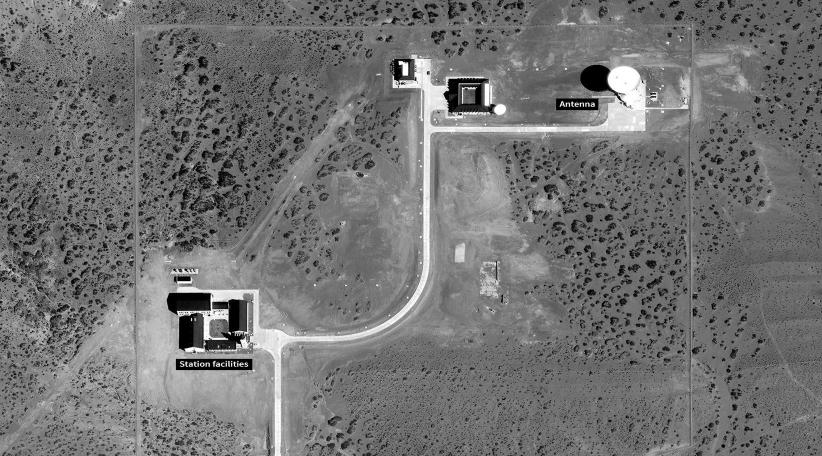
CONSTRUCTIONArgentina’s Congress did not approve the station until February 2015 but contruction work had began in the summer of 2013. By early 2017, most of the buildings appeared to be structurally complete. At least 300 Argentine construction workers assisted on the site, according to CONAE, before the project was handed over to Chinese management. Today, there are 30 Chinese staff members who work and live at the station, Las Lajas Mayor Maria Espinosa said.Satellite images courtesy of DigitalGlobe, a Maxar company
China’s space program is run by its military, the People’s Liberation Army. The Patagonian station is managed by the China Satellite Launch and Tracking Control General (CLTC), which reports to the PLA’s Strategic Support Force.
Beijing insists its space program is for peaceful purposes and its foreign ministry in a statement stressed the Argentine station is for civilian use only. It said the station was open to the public and media.
“The suspicions of some individuals have ulterior motives,” the ministry said.
Asked how it ensures the station is not used for military purposes, Argentina’s space agency CONAE said the agreement between the two countries stated their commitment to “peaceful use” of the project.
It said radio emissions from the station were also monitored, but radio astronomy experts said the Chinese could easily hide illicit data in these transmissions or add encrypted channels to the frequencies agreed upon with Argentina.
CONAE also said it had no staff permanently based at the station, but they made “periodic” trips there.
The United States has long been worried about what it sees as China’s strategy to “militarize” space, according to one U.S. official, who added there was reason to be skeptical of Beijing’s insistence that the Argentine base was strictly for exploration.
Other U.S. officials who spoke to Reuters expressed similar concerns.
“The Patagonia ground station, agreed to in secret by a corrupt and financially vulnerable government a decade ago, is another example of opaque and predatory Chinese dealings that undermine the sovereignty of host nations,” said Garrett Marquis, spokesman for the White House National Security Council.
Some radio astronomy experts said U.S. concerns were overblown and the station was probably as advertised — a scientific venture with Argentina — even if its 35-meter diameter dish could eavesdrop on foreign satellites.
Tony Beasley, director of the U.S. National Radio Astronomy Observatory, said the station could, in theory, “listen” to other governments’ satellites, potentially picking up sensitive data. But that kind of listening could be done with far less sophisticated equipment.
“Anyone can do that. I can do that with a dish in my back yard, basically,” Beasley said. “I don’t know that there’s anything particularly sinister or troubling about any part of China’s space radio network in Argentina.”
Argentine officials have defended the Chinese station, saying the agreement with China is similar to one signed with the European Space Agency, which built a station in a neighboring province. Both have 50-year, tax-free leases. Argentine scientists in theory have access to 10 percent of the antenna time at both stations.
The law experts who reviewed the documents said there is one notable difference: ESA is a civilian agency.
“All of the ESA governments play by democratic rules,” Uriburu said. “The party is not the state. But that’s not the case in China. The party is the state.”
In the United States, NASA, like the ESA, is a civilian agency, while the U.S. military has it own space command for military or national security missions. In some instances, NASA and the military have collaborated, said Jonathan McDowell, an astronomer at the Harvard-Smithsonian Center for Astrophysics.
“The line does blur sometimes,” he said. “But that’s very much the exception.”
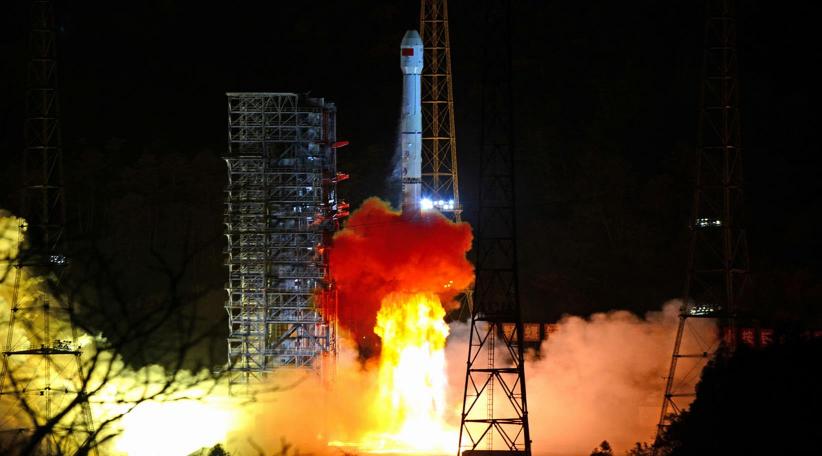
MOON LAUNCHA Long March-3B rocket carrying China’s Chang’e 4 lunar probe takes off from the Xichang Satellite Launch Center in Sichuan province on Dec. 8, 2018. In January, China became the first nation to land a spacecraft on the dark side of the moon. Chinese media said the station in Neuquen played a key role in that mission.Photo by Reuters/Stringer
BLACK BOX
In Las Lajas, a town of 7,000 people located about 40 minutes drive from the station, the antenna is a source of bewilderment and suspicion.
“These people don’t allow you access, they don’t let you see,” said shop owner Alfredo Garrido, 51. “My opinion is that it is not a scientific research base, but rather a Chinese military base.”
Among the wilder conspiracy theories reporters heard during a visit to the town: That the base was being used to build a nuclear bomb.
The drive from Las Lajas to the space station is barren and dusty. There are no signs indicating the station’s existence. The sprawling antenna is suddenly visible after a curve in the gravel road off the main thoroughfare. The massive dish is the only sign of human life for miles around.
Reuters