- Region:
- World
- Category:
- Tourism
WTTC Highlights the Positive Impact of Cruise Tourism on Communities Worldwide
![WTTC Highlights the Positive Impact of Cruise Tourism on Communities Worldwide.]()
WTTC Highlights the Positive Impact of Cruise Tourism on Communities Worldwide.

The World Travel & Tourism Council (WTTC) has unveiled its latest report, “Cruising for Impact,” highlighting the strategic role of cruise tourism as a driver of economic and social development across destinations worldwide.
According to the report, the cruise industry contributed $98.5 billion to global GDP in 2024, generating a total economic output of $199 billion. This impact also supported 1.8 million jobs and generated $60.1 billion in wages, reflecting the sector’s scale and global reach.
The study emphasizes that cruise tourism not only stimulates economies but also strengthens the social fabric of host communities. Data from the Cruise Lines International Association (CLIA) shows that more than 60% of cruise passengers return to destinations they first visited via a cruise, reinforcing long-term tourism demand.
A key finding is the sector’s deep integration with local economies. More than 1.4 million jobs are generated onshore, while globally one full-time job is created for every 20 cruise passengers, underscoring the direct link between tourism demand and livelihoods in destinations.
The report also highlights $93 billion in direct cruise-related spending, much of which flows into local businesses, supporting small enterprises, entrepreneurs, and tourism microeconomies in port and coastal destinations.
Through seven key pillars, WTTC outlines how cruise tourism contributes to positive social outcomes, including job creation and skills development, diversity and inclusion, community strengthening, cultural preservation, infrastructure development, environmental innovation, and crisis and health response.
In this context, Gloria Guevara, WTTC President and CEO, stated that “cruise tourism delivers real, lasting benefits for communities around the world,” noting that repeat visitation creates sustained opportunities for local businesses and supports long-term economic vitality.
The report also underscores the importance of collaboration between governments, destinations, and industry stakeholders to ensure inclusive and sustainable growth, integrating cruise tourism into national development strategies with a focus on local sourcing and talent development.
With passenger capacity projected to grow by 19% between 2022 and 2028, the cruise sector is expected to play an even greater role in fostering resilient, inclusive, and prosperous communities worldwide.
Royal Caribbean
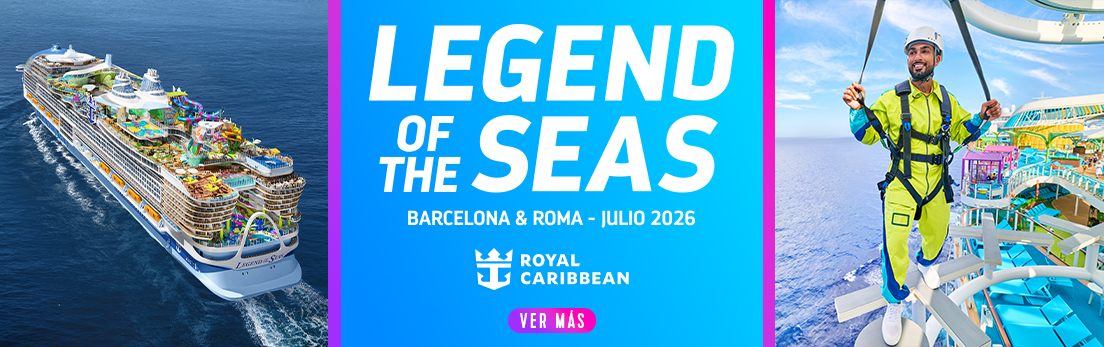
In line with the sector’s expansion, Royal Caribbean is continuing to invest heavily in innovation and fleet growth. The company is upgrading several of its ships with new staterooms, dining concepts, and entertainment venues, while also preparing the launch of new Icon-class vessels, reinforcing its focus on delivering more immersive and technologically advanced cruise experiences.