- Region:
- America
- Category:
- Tourism
Dame Pania Tyson-Nathan calls for a transformation of global tourism: “It’s not just where we go, but whose place we are part of”
-
![Dame Pania Tyson-Nathan calls for a transformation of global tourism: “It’s not just where we go, but whose place we are part of”.]()
Dame Pania Tyson-Nathan calls for a transformation of global tourism: “It’s not just where we go, but whose place we are part of”.
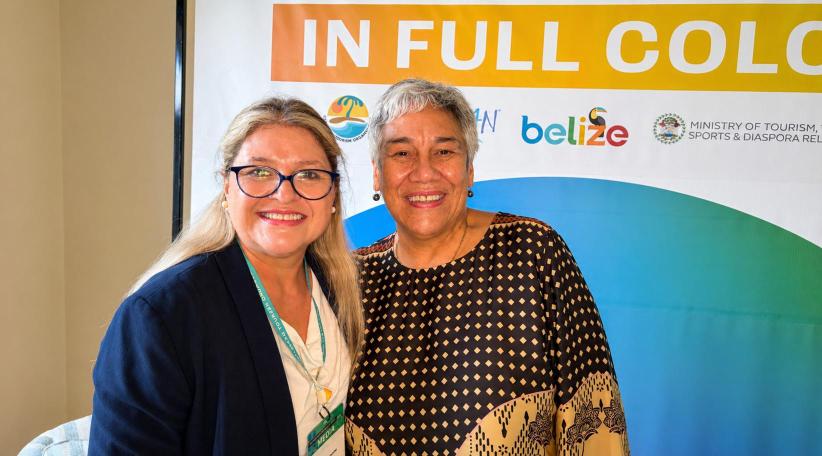
At the Caribbean Conference on Sustainable Tourism Development (STC 2026), held from April 27 to 30 in San Pedro, Ambergris Caye, Belize, the Chief Executive of Māori Tourism New Zealand (NZMT), Dame Pania Tyson-Nathan DNZM, delivered the opening keynote, calling for a fundamental rethinking of global tourism through a cultural, human, and indigenous lens.
Under the theme “Tourism in Full Color: Integrating Blue, Green, Orange Economies and Beyond”, the global Indigenous tourism leader presented a critical view of the current system, warning about structural imbalances created by growth without equity.
“Tourism, at its best, is not just about where we go, but whose place we are part of,” she stated.
In an interview with ABC MUNDIAL, Tyson-Nathan expanded on her perspective, emphasizing the relationship between travelers, cultures, and destinations.
“I’m not just going to a country. I’m going to a people. I’m going to a culture. I’m going to their home,” she said, highlighting tourism as an immersive cultural experience.
She also stressed the importance of cultural respect and preparation before travel:
“I acknowledge your mountains. I acknowledge your people. I acknowledge your culture. It is so much about place. People and place are the same.”
According to Tyson-Nathan, responsible tourism requires visitors to understand cultural norms before arriving at a destination:
“I want to understand, even before I get there, not what wardrobe I have to take, but what are the cultural norms that I need to understand so I’m respectful, so that I’m a participant.”
She also challenged conventional terminology used in the industry:
“I don’t like being called a tourist. We say when you come to New Zealand, you arrive as a visitor, but you leave as part of our family.”
The Māori tourism leader highlighted New Zealand’s managed approach to tourism flows, where value is prioritized over volume.
“In New Zealand, the ratio of visitors to population is 0.6 to 0.7. We’re happy with that because we’ve still got the value. We don’t have as many tourists, but the value of tourism is still high,” she explained.
Finally, she warned about structural inequalities in global tourism systems:
“The places that generate value are often the ones that carry the cost. We must transform the system, not just grow it,” she concluded.