- Región:
- World
- Categoría:
- Economy
Oil prices rise above $100 as new wave of Middle East attacks threatens global supply
-
![Oil prices rise above $100 as new wave of Middle East attacks threatens global supply.]()
Oil prices rise above $100 as new wave of Middle East attacks threatens global supply.
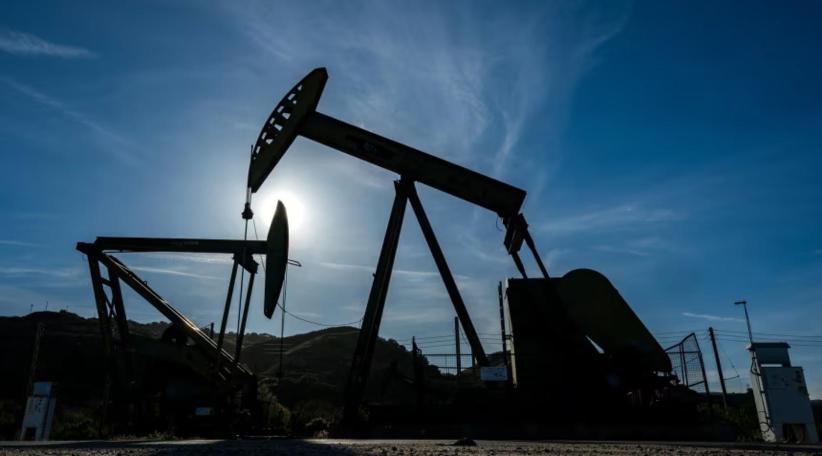
Oil prices climbed above $100 a barrel on Wednesday for the first time since July, as a new wave of attacks on energy facilities and ships across the Middle East raised concerns about further disruptions to global crude supplies.
Brent crude, the international benchmark, jumped nearly 3% to $100.72 a barrel in early trading. U.S. benchmark West Texas Intermediate (WTI) crude rose 2.4% to $95.25 a barrel.
The latest surge is also putting additional pressure on consumers. In the United States, the average price of regular gasoline increased by seven cents overnight to $4.22 a gallon, according to AAA. Diesel prices reached $5.94 a gallon, continuing their rise after hitting a record high.
Financial markets reacted after the U.S. military reported strikes against five Iranian oil tankers, following attempted missile attacks on a U.S. Navy vessel. At the same time, attacks by Iran-backed Houthi rebels sparked fires at oil facilities in Saudi Arabia.
The Strait of Hormuz remains at the center of concerns over global energy supplies. Before the war, roughly one-fifth of the world's oil supply passed through the strategic waterway. Fighting has since severely reduced shipping traffic through the strait, creating additional uncertainty for energy markets.
The disruption is also affecting the aviation industry. Rising jet fuel prices have prompted some U.S. and international airlines to cut flights while increasing fares and additional fees.
Bank of America analysts warned that if attacks continue to restrict traffic through the Strait of Hormuz, crude prices could rise to between $95 and $120 a barrel. Significant damage to major energy infrastructure could push prices as high as $150 a barrel.
Meanwhile, negotiations aimed at reaching a preliminary agreement between the United States and Iran have broken down over control of the Strait of Hormuz. Iran maintains that it has the right to determine the terms and charge fees for vessels using the waterway, while the United States is seeking unrestricted passage.
With tensions continuing to escalate, the future of shipping through the Strait of Hormuz and the broader U.S.-Iran conflict will remain critical factors for global oil prices and the international economy in the weeks ahead.