- Region:
- USA
- Category:
- Tourism
ESTO 2026: Optimism, Artificial Intelligence and New Experiences Redefine the Future of U.S. Tourism
-
![ESTO 2026: Optimism, Artificial Intelligence and New Experiences Redefine the Future of U.S. Tourism.]()
ESTO 2026: Optimism, Artificial Intelligence and New Experiences Redefine the Future of U.S. Tourism.
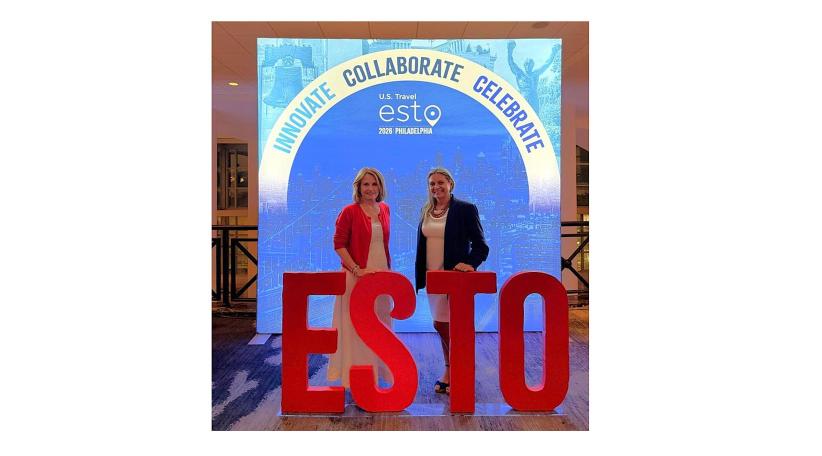
Key takeaways from Caitlan Etchevers, of Visit Lauderdale, after attending the U.S. Travel Association conference alongside more than 1,100 industry professionals.
PHILADELPHIA, U.S. — The American travel industry is moving through a period of rapid change, shaped by artificial intelligence, new consumption patterns, a demand for authentic experiences, and the need to rekindle enthusiasm for travel. That was one of the central messages to emerge from this year's ESTO Conference, organized by the U.S. Travel Association in Philadelphia, Pennsylvania, which brought together roughly 1,100 professionals tied to tourism, destinations, and business development.
Among the attendees was Caitlan Etchevers, of Sales, Marketing & Business Development at Visit Lauderdale, who came back from the event with an extensive list of takeaways that, in her view, should guide the work of Destination Marketing Organizations (DMOs) and the broader travel chain.
Falling Back in Love with America
One of the concepts Etchevers highlights is the need to recreate the sense of pride and collective connection experienced during the last soccer World Cup, using it as a starting point to build the future rather than treating it as an isolated memory. For the executive, the industry has a responsibility to remember that travel is also about joy, social connection, and shared experiences.
The takeaway is especially relevant for destinations: promoting attractions is no longer enough. You have to build an emotion. "Don't show them your logo, show them WHO YOU ARE" sums up one of the principles Etchevers considers central to the future of destination marketing.
Optimism as a Business Strategy
Etchevers notes that social connection is one of the leading predictors of well-being and success, while highly optimistic people are considerably less likely to experience burnout. One line that stuck with the room was blunt: "When optimism goes silent, pessimists get the floor."
Despite ongoing crises and a global landscape of constant disruption, nine out of ten travelers say they still plan to take a trip in the next six months. Demand, in other words, remains strong.
Less "Same As Last Year," More Transformation
ESTO also called for self-criticism about how many organizations manage their resources. Etchevers introduced the concept of "zombies" — activities or investments that keep running even though they no longer generate enough value — and coined the term SALY, "Same As Last Year," to describe the temptation to repeat the same strategies simply because that's how it's always been done. The question, she argues, shouldn't just be "what more can we do?" but also "what should we stop doing?"
Collaboration and Women's Sports
Another central idea was the need to build a true "pit crew," borrowing the term from the team that supports a race car driver: no DMO can operate in isolation, and tourism, food, sports, culture, and community are all part of the same ecosystem. The growth of women's sports as a driver of sports tourism also gained prominence, with a direct positive impact on overnight stays.
Travelers Want Experiences, Not Just Products
According to data shared at the conference, 72% of respondents now value new experiences over buying goods, and 68% of travelers are willing to build an entire trip around food. Food-focused events alone can boost interest in a destination by at least 17%.
Artificial Intelligence Has Already Changed the Game
The deepest shift highlighted at ESTO was artificial intelligence. Etchevers projects that by next year, 71% of travelers will use AI to plan their trips, and those who already do spend roughly twice as much as those who don't. Tomorrow's traveler may start their search with a broad question that AI will need to interpret. That's why, Etchevers argues, "good SEO behavior is good AI behavior": strong search-optimization practices still matter, but content now also needs to be built to be understood by AI systems.
A Deeply Human Conclusion
The tourism industry doesn't just sell hotel rooms, flights, or tour packages — it sells possibility: the chance to discover, share, celebrate, and make memories. That's why Etchevers points to what she calls the "Power Lead": starting every conversation by sharing something positive. The message coming out of Philadelphia is simple but powerful: the future of American tourism won't be defined by technology alone — it will also need to be more human, more experiential, more collaborative, and more optimistic.