- Region:
- Caribbean
- Category:
- Business
CHTA Renews Opposition to Booking.com Commissions on Government-Imposed Taxes Across the Caribbean
-
![CHTA Renews Opposition to Booking.com Commissions on Government-Imposed Taxes Across the Caribbean.]()
CHTA Renews Opposition to Booking.com Commissions on Government-Imposed Taxes Across the Caribbean.
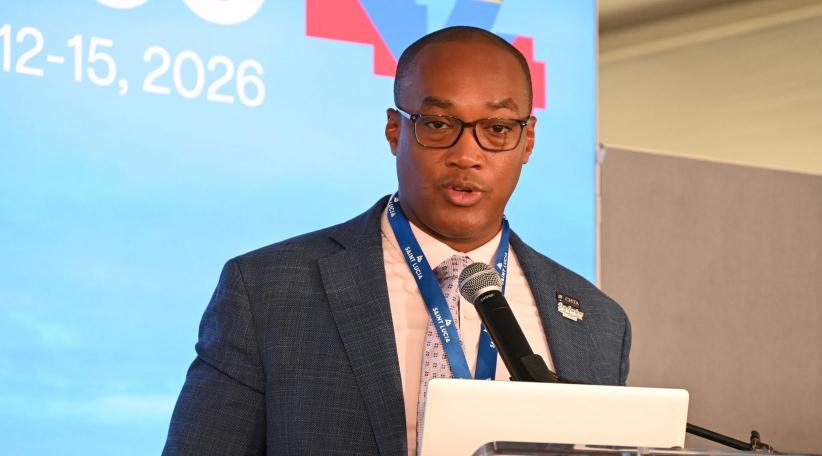
The Caribbean Hotel and Tourism Association is urging Booking.com to reconsider its policy of charging commissions on VAT, GST and other government-imposed taxes, warning that the measure increases operating costs for hotels across the region.
The Caribbean Hotel and Tourism Association (CHTA) has renewed its opposition to Booking.com's policy of including government-imposed taxes in the calculation of commissions charged to hotels and accommodation providers, warning that the measure is adding financial pressure to the Caribbean hospitality industry.
Representing 32 national hotel and tourism associations and accommodation providers throughout the region, CHTA has been challenging the policy since May 2026. Recent notifications sent to hotels in Jamaica and Antigua & Barbuda have intensified concerns, particularly as the changes are being implemented in different markets.
Booking.com notified accommodation partners that its commissionable base would include Value Added Tax (VAT), Goods and Services Tax (GST), and other government-imposed taxes collected by hotels and subsequently transferred in full to national governments. The policy took effect in certain destinations on May 15, 2026, while hotels in Jamaica and Antigua & Barbuda have been notified that the new calculation will apply to bookings beginning November 17.
CHTA argues that these taxes are not hotel revenue, since accommodation providers merely collect them on behalf of governments and are legally required to remit them.
"Taxes remitted to governments belong to those governments and sit outside hotel revenue," said Sanovnik Destang, President of CHTA. He warned that applying commissions to these amounts increases distribution costs without generating additional income for hotels.
CHTA questions differences in Booking.com's policies across markets
The association has also raised concerns about the consistency of Booking.com's commission practices. According to the company's published General Delivery Terms, government taxes are excluded from commission calculations in the United States, with additional exclusions for Dubai and Egypt, while the published terms for the United Kingdom include taxes in the commissionable base.
CHTA is asking Booking.com to provide greater transparency and extend comparable treatment to Caribbean accommodation providers.
The issue has already generated responses from several national tourism organizations. The Jamaica Hotel & Tourist Association has approached the Jamaican government, sent a formal letter to Booking.com and held an initial meeting with the company. Meanwhile, the Barbados Hotel & Tourism Association and the Turks & Caicos Hotel and Tourism Association have issued guidance to their members, with the latter publicly opposing the change.
Higher distribution costs for Caribbean hotels
CHTA warns that the policy could disproportionately affect independent and smaller hotels, which generally operate with narrower profit margins amid high operating costs and significant tax burdens.
The association illustrates the financial impact with a practical example: at a 15% commission rate and a 12% government tax rate, the effective commission increases to 16.8% of pre-tax room revenue. On a room priced at $100, the commission would rise from $15 to $16.80.
CHTA has asked Booking.com to reconsider commissions on government-imposed taxes, extend comparable treatment to Caribbean hotels and engage in constructive discussions with regional hospitality stakeholders.
The association is also reviewing legal and tax frameworks across Caribbean jurisdictions and evaluating potential legislative protections that governments could consider.
"The Caribbean has been a committed and contributing partner in Booking.com's regional growth," said Vanessa Ledesma, CEO of CHTA, calling on the platform to work with the region toward a fair and sustainable solution.
The association maintains that commissions should be calculated on actual hotel revenue rather than taxes collected on behalf of governments.