- Region:
- America
- Category:
- Tourism
MarketHub Americas 2026: Travel Leaders Say Artificial Intelligence Is Reshaping the Future of Travel
-
![MarketHub Americas 2026: Travel Leaders Say Artificial Intelligence Is Reshaping the Future of Travel.]()
MarketHub Americas 2026: Travel Leaders Say Artificial Intelligence Is Reshaping the Future of Travel.
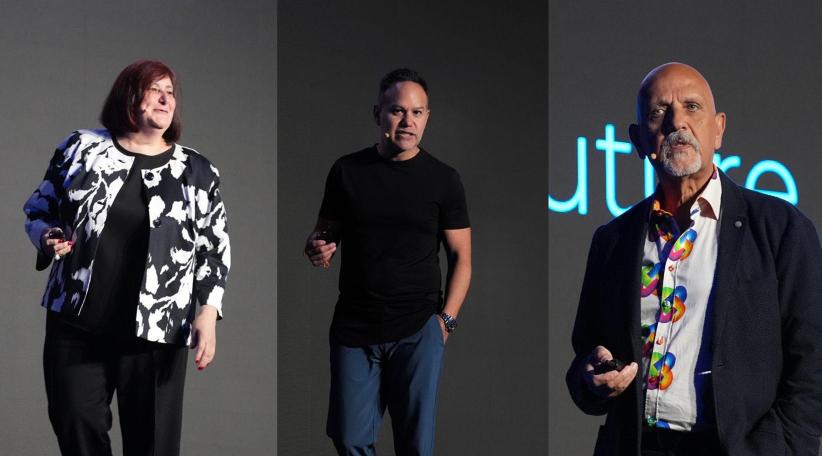
PUNTA CANA, Dominican Republic — Technological transformation and the rapid rise of artificial intelligence were among the central themes discussed during a high-level panel on the future of tourism at MarketHub Americas 2026, organized by HBX Group.
Opening the session, Mark Antipof of HBX Group emphasized that trust will remain one of the most valuable assets for travel companies operating in an increasingly digital environment.
“When consumer trust is broken, it is extremely difficult to rebuild,” Antipof said, stressing the importance of adopting technology and AI while maintaining transparency and strong customer relationships.
According to Antipof, the travel industry is entering a new era shaped by the rapid evolution of artificial intelligence, a technology that is expected to transform how travelers search, book, and experience their journeys.
Rethinking the Future of Travel
During the discussion, Zeina Gedeon, CEO of Trevello, offered an optimistic outlook for the global tourism industry, highlighting the growing number of travelers seeking new destinations and personalized experiences.
While tourism continues to expand worldwide, Gedeon warned that many companies are still making decisions based on assumptions that no longer reflect modern traveler behavior.
“The real question is whether we are making a mistake by assuming that the travel business will continue to operate the same way it did in the past,” she said.
She compared the impact of artificial intelligence to other disruptive technologies that transformed entire industries and argued that tourism will be no exception.
AI Is Changing Traveler Behavior
Panelists agreed that tools such as ChatGPT and other AI-powered platforms are already influencing how consumers gather information, plan trips, and make purchasing decisions.
As a result, travel companies will need to adapt to new forms of customer engagement, combining automation and efficiency with the human touch that remains essential to the travel experience.
Industry leaders concluded that innovation, consumer trust, and adaptability will become increasingly important competitive advantages in the years ahead.
Technology Can Eliminate Group Booking Inefficiencies
The panel also addressed one of the industry's most persistent operational challenges: group travel and event bookings.
Matthew Martínez of Groupblox explained that many group booking processes still rely heavily on emails, phone calls, and manual negotiations between buyers and hotels, creating delays and uncertainty.
According to Martínez, buyers often struggle to access real-time information regarding hotel availability, pricing, and contract conditions, making the process inefficient for both sides.
He argued that the industry must move toward more automated and transparent systems that provide real-time access to inventory and pricing information.
Artificial intelligence and new technology platforms, he said, have the potential to streamline group bookings, accelerate decision-making, and simplify interactions between event organizers, travel planners, and hotel partners.