- Region:
- World
- Category:
- Politics
US Launches Strikes Against Iran Following Helicopter Incident Near Strait of Hormuz
![US Launches Strikes Against Iran Following Helicopter Incident Near Strait of Hormuz.]()
US Launches Strikes Against Iran Following Helicopter Incident Near Strait of Hormuz.
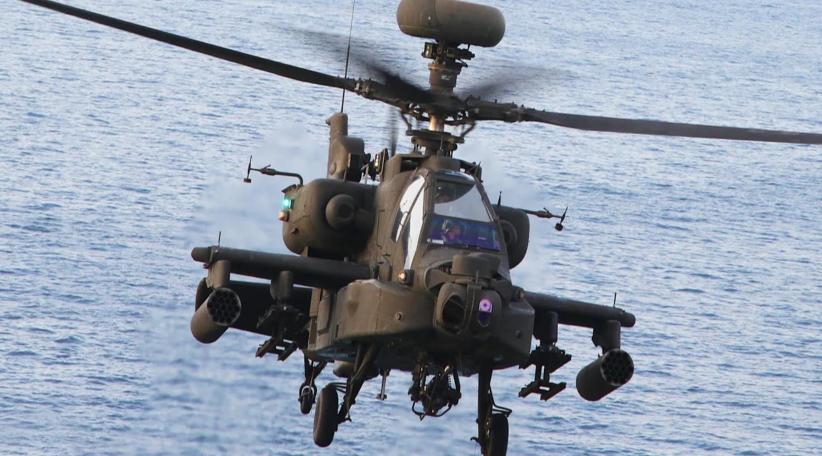
WASHINGTON — The United States launched military strikes against Iranian targets on Tuesday after a U.S. Army Apache helicopter crashed near the Strait of Hormuz in an incident President Donald Trump blamed on Iran, marking a significant escalation in tensions between Washington and Tehran.
According to U.S. Central Command (CENTCOM), the strikes were carried out in response to what American officials described as Iranian involvement in the downing of the helicopter off the coast of Oman. President Trump characterized the military response as “very strong” and “very powerful,” signaling a hardline approach toward the Islamic Republic.
The incident occurred near one of the world's most strategically important maritime corridors. Initial reports indicate that the Apache helicopter collided with an Iranian drone while operating in the region. U.S. officials told media outlets that the drone involved was believed to be a Shahed-type unmanned aerial vehicle, commonly used by Iran and its regional allies.
However, authorities emphasized that the circumstances surrounding the crash remain under investigation and that it is not yet clear whether the helicopter was intentionally targeted.
Iran Responds with Missiles and Drones
Shortly after the U.S. strikes were announced, Iran's Islamic Revolutionary Guard Corps (IRGC) stated that it had launched missiles and drones toward U.S. military targets in the region.
Iranian state-linked media reported explosions in several strategic locations, including Sirik, Bandar Abbas and Qeshm Island, all situated near the Strait of Hormuz.
Residents reported hearing multiple explosions as air defense systems were activated across parts of southern Iran.
Strategic Importance of the Strait of Hormuz
The latest confrontation has drawn global attention due to its proximity to the Strait of Hormuz, a vital waterway through which roughly one-fifth of the world's oil supply passes.
Any disruption to maritime traffic in the area could have significant consequences for global energy markets, shipping routes and international trade.
Security analysts warn that the current escalation risks expanding beyond a limited military exchange and could draw additional regional actors into the conflict.
International Reactions
Governments across Europe, the Middle East and Asia are closely monitoring developments. Several diplomatic sources have called for restraint amid concerns that further retaliation could trigger a wider regional confrontation.
As of Tuesday evening, neither Washington nor Tehran had indicated any willingness to de-escalate the situation.
The Pentagon stated that U.S. forces in the region remain on heightened alert, while Iranian officials vowed that any future attacks would be met with additional responses.
The situation remains fluid as military operations and diplomatic efforts continue to unfold across the Gulf region.