- Region:
- World
- Category:
- Politics
World waits as Trump, Xi and Putin prepare for high-stakes meeting
-
![World waits as Trump, Xi and Putin prepare for high-stakes meeting.]()
World waits as Trump, Xi and Putin prepare for high-stakes meeting.
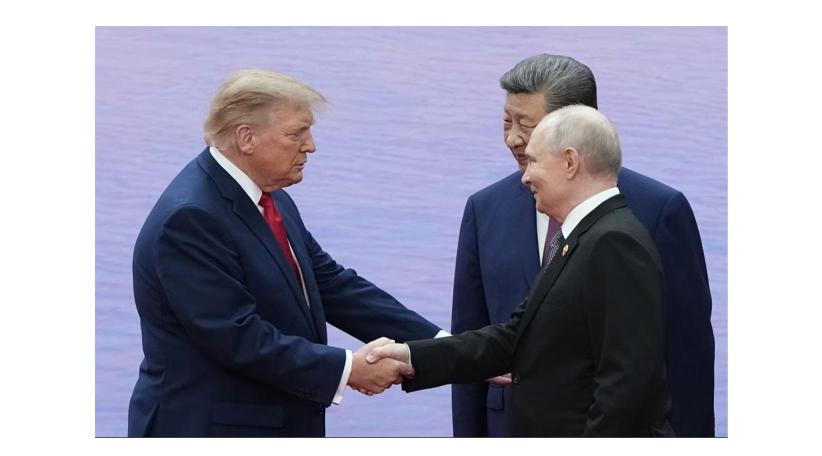
The trilateral meeting is scheduled for Thursday in Shenzhen, China, on the sidelines of the APEC summit. Ukraine, Iran, nuclear disarmament and trade tensions are expected to dominate the agenda. The meeting is drawing worldwide attention and raising concerns among major international capitals.
The world is watching Shenzhen, where U.S. President Donald Trump, Chinese President Xi Jinping and Russian President Vladimir Putin are preparing to hold a trilateral meeting on Thursday, November 19, in what could become a turning point in international relations.
The meeting will take place on the sidelines of the Asia-Pacific Economic Cooperation (APEC) summit, against a backdrop of the war in Ukraine, the conflict involving Iran, trade tensions and growing uncertainty over the future of global security. Its political significance extends far beyond diplomatic protocol: it brings together the leaders of three powers with enormous economic, military and strategic influence.
In the hours leading up to the summit, Trump arrived in China and was personally welcomed by Xi Jinping at Shenzhen airport. The three leaders subsequently appeared together at the APEC welcome event, where Trump and Putin exchanged a handshake as Xi looked on. Xi and Putin also held bilateral talks, highlighting the strength and stability of their relationship. The Russian president expressed optimism about the potential benefits of the upcoming discussions with his American and Chinese counterparts.
Ukraine, Iran and nuclear arms control on the agenda
One of the most sensitive issues will be Russia's war against Ukraine. Trump shifted expectations surrounding the meeting by confirming that he intends to address the conflict, despite earlier indications from U.S. officials that it might not be discussed. Moscow also wants broader European security arrangements included in any negotiations toward a potential settlement.
Ukraine's absence from the negotiating table has raised concerns in Kyiv and among European allies. President Volodymyr Zelenskyy has warned against allowing major powers to negotiate spheres of influence without the participation of countries directly affected by their decisions. Comparisons with the 1945 Yalta Conference, where the victorious powers of World War II discussed Europe's postwar political order, have once again entered the international debate.
Trump also wants to promote discussions on nuclear disarmament. The expiration of the New START treaty between Washington and Moscow in February 2026 has created additional uncertainty over limits on strategic nuclear arsenals. Bringing China into future arms control negotiations would represent a major diplomatic challenge, as Beijing remains reluctant to accept restrictions while arguing that its nuclear capabilities are considerably smaller than those of the United States and Russia.
The war involving Iran, international trade, economic sanctions and technological competition are also expected to feature in the discussions. Washington and Beijing remain locked in a strategic rivalry over leadership in artificial intelligence, advanced manufacturing and semiconductors.
A photograph with potentially global consequences
Beyond any concrete agreements that may emerge, the image of Trump, Xi and Putin sitting at the same table carries extraordinary political significance. For decades, U.S. post-Cold War strategy sought to prevent a strategic alliance between Moscow and Beijing. Today's diplomatic dynamics reveal a different landscape, in which Washington is also seeking direct negotiations with both governments.
An additional bilateral meeting between Trump and Putin, confirmed for Thursday by American and Russian officials, adds another significant dimension to the diplomatic agenda.
Nevertheless, analysts caution against expecting immediate breakthroughs. The differences between the three powers remain substantial, and the issues under discussion involve conflicts and strategic interests that extend far beyond the decisions of their leaders.
Shenzhen is therefore becoming the focal point of a diplomatic gathering with worldwide implications. What happens there — and, above all, what its participants are willing to negotiate — will be closely watched across Europe, Ukraine, the Middle East and by countries seeking to preserve their position in an increasingly uncertain international order.