- Region:
- World
- Category:
- Technology
Artemis II Concludes Historic Lunar Journey and Begins Return to Earth
-
![Artemis II Concludes Historic Lunar Journey and Begins Return to Earth.]()
Artemis II Concludes Historic Lunar Journey and Begins Return to Earth. -
![Artemis II Concludes Historic Lunar Journey and Begins Return to Earth.]()
Artemis II Concludes Historic Lunar Journey and Begins Return to Earth.
- Region:
- World
- Category:
- Technology
- Author/s:
- Publication date:
NASA’s Artemis II mission wrote a new chapter in the history of space exploration by completing a historic seven-hour lunar flyby, marking the first time astronauts have returned to the vicinity of the Moon since the Apollo 17 mission in 1972.
Aboard the Orion spacecraft, astronauts Reid Wiseman, Victor Glover, Christina Koch and Canadian astronaut Jeremy Hansen traveled farther from Earth than any humans in history. The crew reached a maximum distance of 405,000 kilometers from our planet, surpassing the record set by Apollo 13 56 years ago.
The most delicate and anticipated moment of the journey came when Orion disappeared behind the Moon. For 40 minutes, the crew remained completely out of contact due to the natural blocking of radio signals by the Moon’s far side. When communications were restored, the excitement was immediate: the mission had successfully passed through one of the most symbolic and technically challenging moments of the flight.
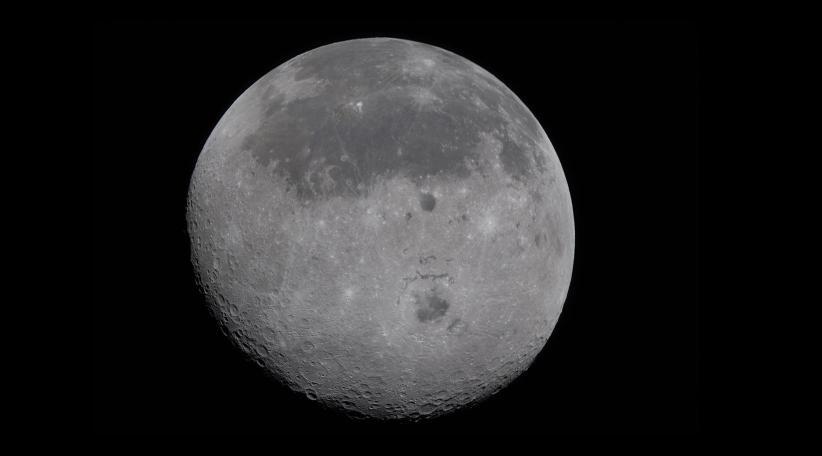
The flyby brought the crew to within about 6,500 kilometers of the lunar surface. From that privileged vantage point, the astronauts observed regions of the far side of the Moon never before directly seen by human beings. They photographed giant craters, ancient lava flows, fractures, mountain ranges and enormous impact basins, while describing differences in color, brightness and texture that could provide new clues about the Moon’s composition and geological evolution.
Among the sites observed were the landing areas of Apollo 12 and Apollo 14, visible as an emotional link between the new generation of explorers and the first era of the space race.
But the journey offered even more surprises. As the spacecraft traveled across the Moon’s far side, the crew witnessed a total solar eclipse from space. For nearly an hour, the Moon completely blocked the Sun, allowing the astronauts to observe the solar corona, the outermost layer of our star.
During the darkness of the eclipse, the astronauts also detected six brief flashes on the lunar surface. According to preliminary analysis, they appear to have been meteoroid impacts striking the Moon at thousands of kilometers per hour — an extremely rare phenomenon to witness in real time.
The crew also experienced a sight that only a handful of humans have ever seen: Earth rising above the lunar horizon as Orion emerged from behind the Moon. That “Earthrise” symbolized the return of communications and the beginning of the journey home.
After completing the observation phase, the astronauts received a live call from President Donald Trump and spoke with NASA Administrator Jared Isaacman. Later, they are expected to answer questions from scientists and the public, while teams on Earth begin analyzing thousands of images and scientific data gathered during the flyby.
Beyond the records, Artemis II represents the first major step toward NASA’s next goal: returning astronauts to the lunar surface within the next two years and sending them near the Moon’s south pole, a region where water ice may exist.
The mission not only revives the spirit of Apollo. It also opens a new era of exploration in which the Moon once again becomes the gateway to even more distant destinations, including Mars.