- Region:
- USA
- Category:
- Politics
Trump takes advantage of the government shutdown to restructure the administration
-
![Trump takes advantage of the government shutdown to restructure the administration]()
Trump takes advantage of the government shutdown to restructure the administration
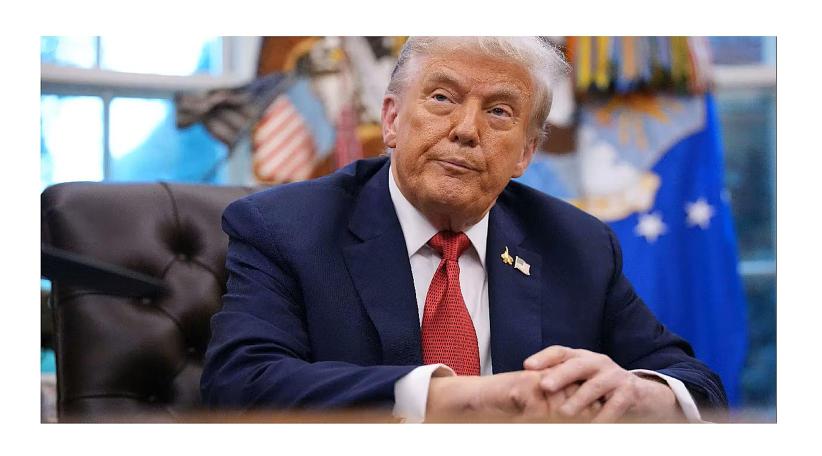
WASHINGTON – Amid the government shutdown, President Donald Trump is seeking to take advantage of the situation to restructure the federal administration, while also pressuring Congress on budget priorities and taking action against certain political opponents.
Instead of the traditional furloughs that accompany lapses in government funding, the Trump administration is threatening permanent layoffs. White House press secretary Karoline Leavitt announced that dismissals were “imminent,” while the Office of Management and Budget (OMB) froze nearly $18 billion in infrastructure funds, including for New York’s subway and the Hudson Tunnel project — a direct blow to the home state of the Democratic congressional leadership.
Trump praised his budget director Russ Vought, architect of the conservative policy agenda known as Project 2025. “He can trim the budget to a level that you couldn’t do any other way,” the president said.
A shutdown with sharper edges
The shutdown, now in its second day, has already shown itself to be different from previous ones. OMB has informed Republican lawmakers that layoffs could begin within days, building on the work of the Department of Government Efficiency led by Elon Musk earlier this year, which already introduced deep cuts across federal agencies.
House Democratic leader Hakeem Jeffries accused the president of deliberately using the shutdown to cause harm. “The cruelty is the point,” he said.
The economic impact could be severe. The nonpartisan Congressional Budget Office (CBO) estimates that 750,000 federal employees could be furloughed daily, representing a loss of $400 million in wages. Past shutdowns have reduced GDP by depressing private-sector demand for goods and services — effects that typically reverse once the government reopens, but not without significant short-term disruption.
High-stakes political standoff
With Congress paralyzed, there is no immediate prospect of an agreement. Lawmakers remain divided, particularly over health care funding. Democrats are resisting any measure that threatens the Affordable Care Act, warning of potential premium spikes. Republicans, led by Vice President JD Vance, have signaled willingness to negotiate but argue subsidies do not expire until the end of the year.
Meanwhile, Trump’s administration has moved unilaterally to protect priorities such as defense spending and immigration enforcement. Thanks to provisions in the so-called “One Big Beautiful Bill” signed earlier this year, funding for the Pentagon and Homeland Security remains secure, ensuring continuity for the president’s deportation agenda.
Other agencies, however, face prolonged disruption. Workers at the Departments of Education, Energy, and State will go without pay until the shutdown ends.
A test of power
This episode is the latest in a series of moves by Trump and Vought to challenge Congress’s traditional control of federal spending. Earlier this year, OMB attempted to rescind funds already approved for programs such as Head Start, clean energy, and foreign aid. Though the Government Accountability Office flagged these actions as unlawful, the Supreme Court last week allowed the administration to withhold nearly $5 billion in overseas assistance.
As the shutdown deepens, its political and economic costs continue to mount. House Speaker Mike Johnson (R-La.) warned, “The longer this goes on, the more pain will be inflicted.”
But for Trump, the standoff appears to be less about compromise than about power. “So they’re taking a risk by having a shutdown,” he said at the White House.
For now, Congress is in recess, and no new talks are scheduled. The question remains whether lawmakers will bend — or whether Trump will continue to use the shutdown as a tool to reshape the federal government in his image.