- Region:
- World
- Category:
- Politics
Ukraine marks 30 days since Russia's invasion - By Pablo Munini
-
-
-
-
-
![Ukraine marks 30 days since Russia's invasion - By Pablo Munini]()
Photo: Marco Cremonesi @marco_cremonesi_imago Ukraine marks 30 days since Russia's invasion - By Pablo Munini ![Ukraine marks 30 days since Russia's invasion - By Pablo Munini]()
Photo: Pablo MUNINI @pablomunini Ukraine marks 30 days since Russia's invasion - By Pablo Munini
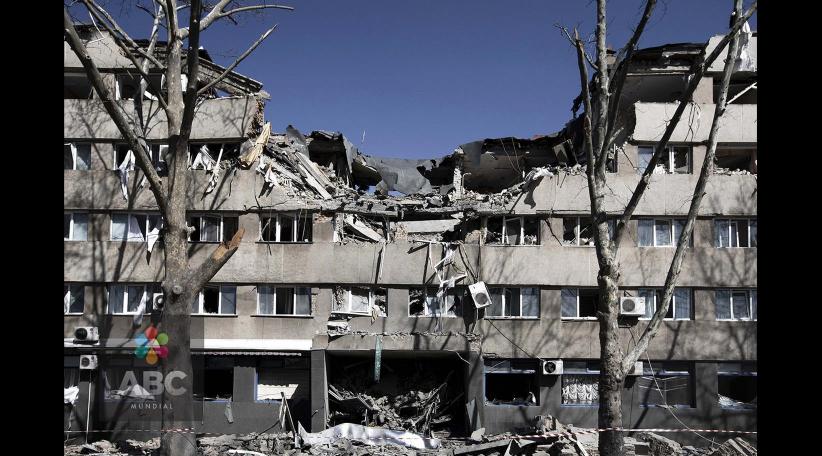
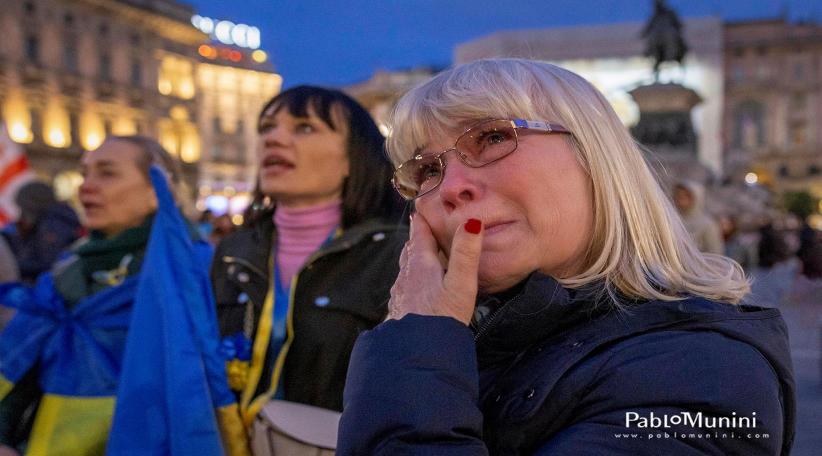
The war that was going to last just a few days is now one month old
Three and a half million refugees, the largest exodus of humanity in Europe since the end of the Second World War. Hospitals bombed. Schools destroyed. Towns like Mariopuol razed to the ground.
Vladimir Putin's war against Ukraine, which he thought would take just a few days, which would be a grand military parade in the tsar's plans, now enters its second month with its chilling and saddening result.
The fierce resistance and counteroffensive of the Ukrainians remains steadfast, led by the psychological force of President Volodymyr Zelenskyy. He has remained with his people in their invaded country, not opting for the safety of exile, a choice that would surely have demoralized the population and resigned the country to its invaders.
One month after the start of the invasion, NATO, the G-7, and the European Council met in Bruxelles, a summit that included US president Joe Biden. The countries agreed to take new unified measures against Russia and Vladimir Putin and his inner circle, and evaluate the option of supplying air defense systems to Ukraine.
Europe, hand in hand with President Biden, is carrying out an unprecedented response. Harsh sanctions have been imposed on the Russian economy and on the assets of the oligarchs of Putin's elite, and large economic organizations and businesses have shown solidarity against Russia by abandoning their activities in the Russian market. McDonalds and its symbolic Big Mac, which generated long lines after opening in Moscow's Pushkin Square on January 31, 1990, disappeared from Moscow almost overnight. President Zelenskyy, in remote speeches with the European parliaments, has implored their countries' companies to leave the Russian market. Yesterday, speaking to the French parliament, he expressly asked the French companies of Renault and Leroy Merlin to suspend their activities in Russia.
In spite of its swift reaction, Europe has been slow to overcome the psychological shock of the invasion. It was predicted by US intelligence agencies, but Europe refused to believe it, or simply hoped it was untrue, because of the responsibilities and consequences it would bring. The European continent depends on Russia for 45% of its hydrocarbon energy supply, and international trade and direct investments in the Russian market are colossal.
A nonstop debate has begun in European politics and in the media since February 24. It is a debate not only about military aid, but also about the economic consequences Europe, the West, and the world at large will face. Uncertainty makes forecasting difficult. Rating agencies vary the percentage of the fall of the GDP of the Russian economy to be between 6% and 30%. The boomerang effect of all this on the European economy has generated enormous fear.
The European continent also feels guilt over its faits accomplis of the past, and assumption of responsibility is now the order of the day. Previously outspoken Western admirers of Tsar Putin have remained silent, perhaps for fear of facing the harsh judgments like those received by Matteo Salvini, the leader of Italy's right-wing League party, during his recent visit to Poland.
And while European societies are lost in their endless discussions and sometimes abstract debates, the brutal invasion continues to grind on in a horribly real way in Ukraine. The true grit and pride of the Ukrainian people has turned this planned short takeover by Russia into a prolonged conflict. As our reporter in Ukraine, Marco Cremonesi, tells us, the feeling on the ground is that the conflict will continue for a long and indefinite time. The initial “express war” has now become a war of attrition, with cities besieged and civilians expelled by the millions from their homes. The more the Ukrainian people resist, the more cruel the Russian war machine becomes.
The journalist Andrea Nicastro of the Italian daily newspaper Corriere della Sera posited that if in the beginning the Kremlin's objective was to embrace the bucolic and friendly land of Gogol's tales, it is now to humiliate it. If Ukraine doesn't want to be Russian, it won't belong to the Ukrainians or the West either.
Ukraine however, despite the brutality of the invasion, has become in the last month a symbol of resistance, freedom, dignity, and love for one's motherland to the world. It has united its citizens from the most distant ends of the planet, and the colors of its flag have become a powerful symbol of the inviolable values of the individual, the citizen, and a sovereign state. So many have learned so much this month about the history, the geography, and the importance of Ukraine and its cities. This violent invasion will never be able to blur or erase these things from our spirit and collective experiences, because Ukraine has now become a part of ourselves and is tied to our deepest values and convictions.
We admire and are moved by the spirit and unity of the Ukrainian people. Slava Ukraini! Glory to Ukraine!
English text by Meredith Brunel
VIDEO: Marco Cremonesi