- Region:
- USA
- Category:
- Tourism
IPW 2026 Set to Open in Fort Lauderdale as Global Tourism Marketplace Drives Billions in Future Travel to the United States
![IPW 2026 Set to Open in Fort Lauderdale as Global Tourism Marketplace Drives Billions in Future Travel to the United States.]()
IPW 2026 Set to Open in Fort Lauderdale as Global Tourism Marketplace Drives Billions in Future Travel to the United States.
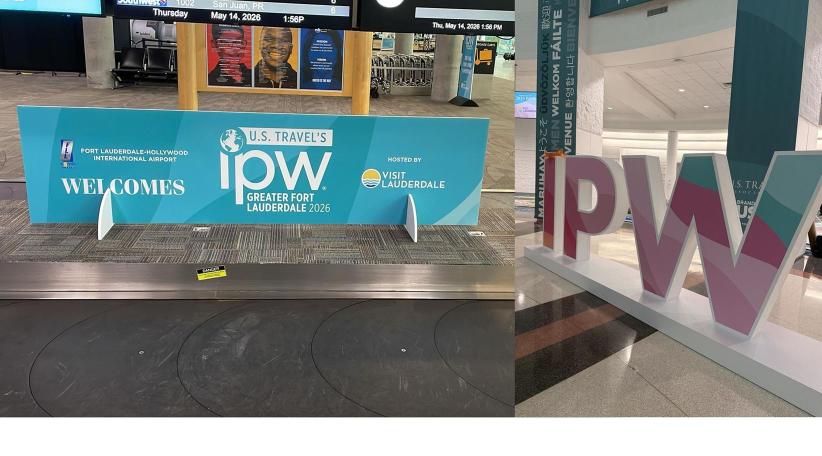
FORT LAUDERDALE, United States. IPW 2026, the leading inbound travel trade show in the United States, is set to begin in Greater Fort Lauderdale, Florida (May 17–21, 2026), bringing together thousands of global tourism leaders in what is widely regarded as the most important marketplace for international travel to the U.S.
Organized by the U.S. Travel Association, IPW functions as a high-impact B2B platform where destinations, hotels, airlines, tour operators, and international buyers conduct pre-scheduled business meetings that generate future travel demand and long-term commercial agreements.
The event is expected to host more than 5,200 tourism professionals from over 70 countries, including 1,000+ exhibitors, buyers, and media representatives, consolidating its role as a strategic engine for inbound tourism to the United States.
According to official industry data, IPW facilitates more than 100,000 pre-scheduled business appointments, generating billions of dollars in future travel spending and contributing to the arrival of millions of international visitors over the following years.
A global platform shaping the future of inbound tourism
IPW is recognized as the central marketplace where U.S. destinations and international travel buyers define future travel flows, packaging, and promotional strategies. Through structured business appointments, participants negotiate tourism products that later translate into global marketing campaigns and travel itineraries.
The 2026 edition also reinforces Fort Lauderdale’s positioning as a rising international hub for tourism, meetings, and events, with the Broward County Convention Center serving as the central venue for the show.
Fort Lauderdale as a strategic tourism gateway
For the first time, Greater Fort Lauderdale will host IPW, highlighting Florida’s growing role in global tourism connectivity. The destination combines strong air access, hospitality infrastructure, and waterfront experiences, positioning itself as a competitive gateway for international business and leisure travel.
Local authorities and industry stakeholders view the event as a long-term catalyst for tourism growth, strengthening Florida’s visibility in key global markets.
Latin America: a fast-growing outbound market to the U.S.
Within the global tourism landscape, Latin America continues to expand its relevance as one of the fastest-growing source markets for travel to the United States, with Florida among the main destination beneficiaries.
Markets such as Argentina, Brazil, and Colombia have shown consistent growth in visitation, driven by increased air connectivity, leisure travel demand, shopping tourism, and family-oriented trips to destinations including Miami, Orlando, and Greater Fort Lauderdale.
🇦🇷 Argentina and the Visa Waiver Program: a potential game-changer for travel demand
A key development closely followed by the tourism industry is Argentina’s advancing process toward possible reintegration into the U.S. Visa Waiver Program (VWP), which would allow Argentine citizens to travel to the United States for tourism or business for up to 90 days without a traditional visa, pending authorization.
If implemented, expected scenarios suggest that this measure could significantly increase outbound travel from Argentina to the United States, reducing administrative barriers and facilitating faster travel approvals through the ESTA system.
Industry sources highlight that Argentina has shown strong growth in travel demand to the U.S. in recent years, and a potential visa-free framework could further accelerate passenger flows, particularly toward Florida’s key tourism hubs.
This development is seen as strategically important for the U.S. travel industry, as it could enhance market accessibility and stimulate new demand from one of Latin America’s most dynamic outbound travel markets.