- Region:
- World
- Category:
- Economy
Global Markets Show Signs of Recovery Amid Intensifying US-China Trade War
![Global Markets Show Signs of Recovery Amid Intensifying US-China Trade War]()
Global Markets Show Signs of Recovery Amid Intensifying US-China Trade War
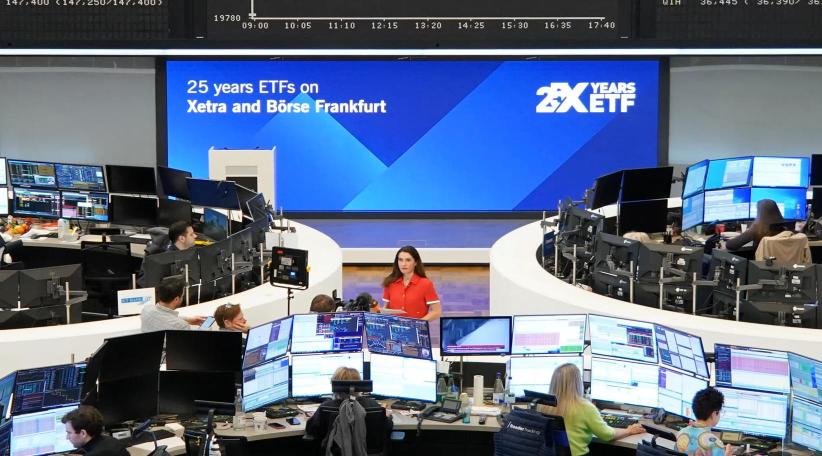
European markets rebounded slightly on Tuesday after days of sharp losses driven by escalating tensions between the United States and China. The temporary recovery comes amid rising global fears of a prolonged trade war between the world’s two largest economies.
The pan-European STOXX 600 index rose 0.7% in early trading, bouncing back from 14-month lows following four consecutive sessions of heavy selling. U.S. stock futures also pointed higher, offering a glimmer of optimism after trillions of dollars in market value were wiped out in recent sessions.
The financial volatility is rooted in the renewed confrontation between Washington and Beijing. On April 2, U.S. President Donald Trump announced an additional 50% tariff on Chinese imports in retaliation for Beijing’s 34% tariffs enacted on what China dubbed its "Liberation Day." In response, China’s Ministry of Commerce condemned the move, calling it “blackmail” and vowed to “fight to the end” to protect national interests.
“America’s threat to further increase tariffs is yet another mistake and an example of coercive diplomacy. China will never accept this,” stated a government spokesperson in a broadcast on state-run CCTV.
Asked about the potential for renewed talks, Chinese Foreign Ministry spokesman Lin Jian said the U.S. actions do not reflect “a sincere desire for dialogue” and urged Washington to approach negotiations with “equality, mutual respect, and shared benefit.”
Asia Responds with Damage Control
China instructed state-owned enterprises to stabilize domestic markets following Monday’s selloff, while neighboring Asian governments launched coordinated economic responses.
In Japan, Prime Minister Shigeru Ishiba spoke with Trump late Monday and convened an emergency task force to evaluate the impact of the new 24% U.S. tariffs on steel and auto exports. The Japanese government appointed Ryosei Akazawa as chief trade negotiator and dispatched high-level officials to Washington in an effort to de-escalate tensions.
Chief Cabinet Secretary Yoshimasa Hayashi emphasized the urgency, noting that the tariffs would harm multiple sectors of Japan’s export-dependent economy. “We will do everything possible to convince the U.S. to reconsider,” he told reporters.
India Eyes Bilateral Deal Amid Rising Tariffs
India, another major Asian economy affected by the U.S. tariff hike, is seeking to finalize a bilateral trade agreement to avoid further disruption. External Affairs Minister S. Jaishankar held talks with U.S. Senator Marco Rubio and pushed for an early conclusion to negotiations.
India currently faces a 26% tariff on its exports to the U.S. and is seeking concessions in return for greater market access for American dairy and agricultural products. However, India remains cautious, as the farming sector employs a vast majority of its population.
Commerce Minister Piyush Goyal is set to meet with exporters this week to assess risks and propose countermeasures. According to the State Department, Jaishankar and Rubio discussed how to move toward a “fair and balanced” trade relationship.
Soft Diplomacy and Regional Coordination in Southeast Asia
Malaysian Prime Minister Anwar Ibrahim condemned the tariffs while advocating for “quiet diplomacy.” He announced that ASEAN nations would send officials to Washington to coordinate a joint response.
Anwar criticized the U.S. move, noting that Malaysia’s trade relationship with the U.S. had historically benefited both economies. The newly imposed 24% tariff on Malaysian goods, he warned, would result in job losses and reduced growth.
Malaysia is also pursuing trade diversification amid uncertainties surrounding globalization and supply chain disruptions.
Hong Kong Reaffirms Free Trade Stance
In Hong Kong, Chief Executive John Lee echoed Beijing’s criticism, labeling Trump’s tariff strategy as “bullying” that undermines global commerce. The semi-autonomous city-state pledged to deepen trade ties with mainland China and sign additional free trade agreements to counteract the negative effects.
“We will open up more, not less,” Lee said, stressing Hong Kong’s role as a hub for foreign investment and free trade.
Outlook Remains Fragile
While Tuesday’s market bounce provided temporary relief, analysts warn that the global economic outlook remains fragile. The ongoing tariff battle could impact supply chains, consumer prices, and GDP growth worldwide. Investors will be watching closely for any signs of diplomatic breakthroughs—but for now, the trade war shows no signs of cooling.