- Region:
- USA
- Category:
- Politics
Trump Imposes New 10% Global Tariff After Supreme Court Blocks His Import Tax Plan
![Trump Imposes New 10% Global Tariff After Supreme Court Blocks His Import Tax Plan.]()
Trump Imposes New 10% Global Tariff After Supreme Court Blocks His Import Tax Plan.
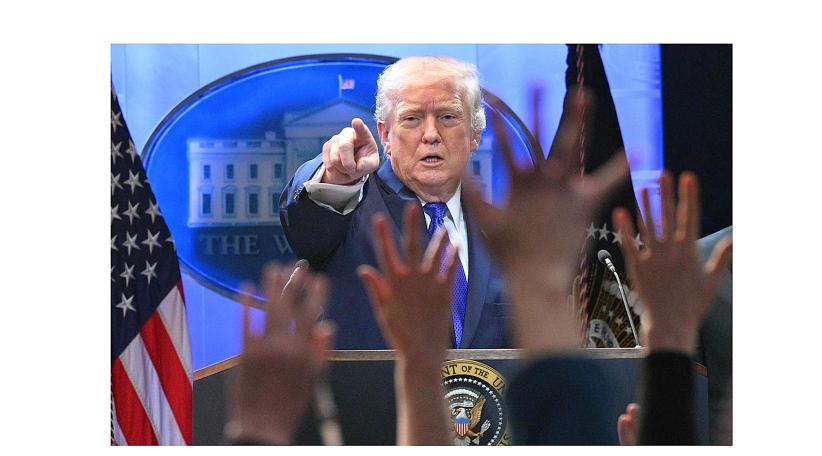
Washington, D.C. — US President Donald Trump announced a new 10% global tariff on imported goods just hours after the Supreme Court of the United States struck down most of his previous worldwide import taxes, marking a major escalation in the US trade policy battle.
In a 6-3 ruling, the Court determined that Trump overstepped his executive authority when he imposed sweeping global tariffs last year under the International Emergency Economic Powers Act (IEEPA). The decision opens the door to potentially billions of dollars in tariff refunds for US companies and states that challenged the measures.
Speaking from the White House, Trump described the ruling as “terrible” and vowed to pursue alternative legal pathways to maintain his trade agenda. “We have alternatives — great alternatives — and we’ll be a lot stronger for it,” he said, signaling that his administration will seek new statutory mechanisms to enforce import duties.
Supreme Court: Congress Did Not Grant Open-Ended Tariff Authority
Chief Justice John Roberts, writing for the majority, stated that Congress did not explicitly authorize the president to impose broad-based tariffs under IEEPA. He emphasized that when lawmakers delegate tariff powers, they do so “in explicit terms and subject to strict limits.”
The majority opinion was joined by the Court’s three liberal justices and two conservative justices appointed by Trump, including Amy Coney Barrett and Neil Gorsuch. Three conservative justices dissented.
The ruling represents a significant constitutional check on executive power in trade policy, reinforcing that taxation authority remains primarily within Congress’s jurisdiction.
What Happened to Trump’s Global Tariffs?
Trump’s original tariffs targeted imports from Mexico, Canada, and China before expanding dramatically to dozens of US trading partners in what he branded “Liberation Day” last April. The White House argued that emergency economic conditions justified unilateral action under IEEPA.
However, businesses and several US states filed lawsuits, arguing that the 1977 law does not explicitly mention tariffs and does not grant the president open-ended power to restructure global trade arrangements.
The Supreme Court agreed with that interpretation, delivering what analysts describe as a major blow to Trump’s second-term trade strategy.
Markets React: Wall Street Rises
Following the Court’s decision, US financial markets reacted positively. The S&P 500 closed up approximately 0.7%, reflecting investor relief over reduced legal uncertainty and the prospect of tariff refunds.
Small business owners who challenged the tariffs cautiously welcomed the decision. Beth Benike, owner of Busy Baby products in Minnesota, said the ruling felt like “a thousand-pound weight” had been lifted. Nik Holm, CEO of Terry Precision Cycling, described it as a “relief,” although he acknowledged that supply chains will take months to normalize.
Despite the legal setback, Trump made clear that he intends to move forward with a revised 10% global tariff framework. He also warned that refund battles could stretch through the courts for years.
The confrontation sets up a prolonged legal and political struggle over executive power, congressional authority, and the future of US global trade strategy. Economists caution that continued tariff uncertainty could affect inflation, manufacturing investment, and supply chain stability.
As the administration searches for alternative legal grounds to justify new import duties, global markets, US businesses, and international trade partners will be watching closely.