- Región:
- World
- Categoría:
- Politics
U.S., Germany strike Nord Stream 2 pipeline deal to push back on Russian 'aggression
![U.S., Germany strike Nord Stream 2 pipeline deal to push back on Russian 'aggression]()
The pact aims to mitigate what critics see as the strategic dangers of the $11 billion pipeline, now 98% complete, being built under the Baltic Sea to carry gas from Russia's Arctic region to Germany. U.S., Germany strike Nord Stream 2 pipeline deal to push back on Russian 'aggression
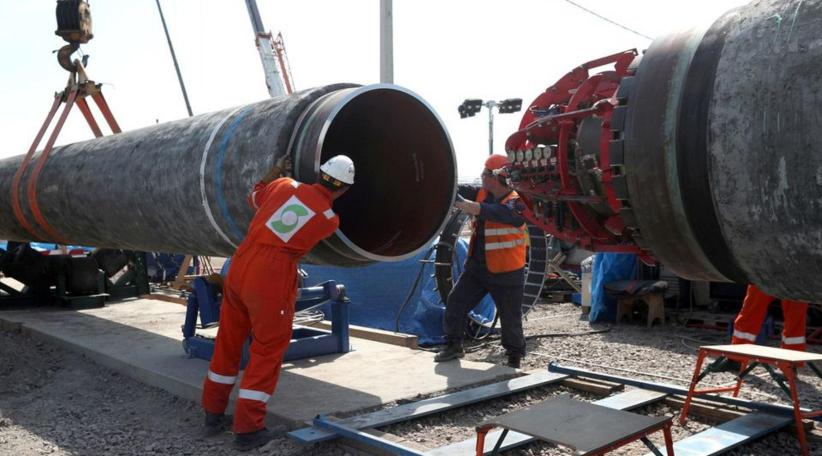
The US says it has reached a deal with Germany to prevent Russia from using its Nord Stream 2 gas pipeline as political leverage over Europe.
The near-complete 1,230km (764 miles) pipeline under the Baltic Sea will double Russian gas exports to Germany.
The United States and Germany on Wednesday unveiled an agreement on the Nord Stream 2 gas pipeline under which Berlin pledged to respond to any attempt by Russia to use energy as a weapon against Ukraine and other Central and Eastern European countries.
The pact aims to mitigate what critics see as the strategic dangers of the $11 billion pipeline, now 98% complete, being built under the Baltic Sea to carry gas from Russia's Arctic region to Germany.
U.S. officials have opposed the pipeline, which would allow Russia to export gas directly to Germany and potentially cut off other nations, but President Joe Biden's administration has chosen not to try to kill it with U.S. sanctions.
Instead, it has negotiated the pact with Germany that threatens to impose costs on Russia if it seeks to use the pipeline to harm Ukraine or other countries in the region.
But those measures appeared to have done little to calm fears in Ukraine, which said it was asking for talks with both the European Union and Germany over the pipeline. The agreement also faces political opposition in the United States and Germany.
A joint statement setting out the details of the deal said Washington and Berlin were "united in their determination to hold Russia to account for its aggression and malign activities by imposing costs via sanctions and other tools."
If Russia attempts to "use energy as a weapon or commit further aggressive acts against Ukraine," Germany will take steps on its own and push for actions at the EU, including sanctions, "to limit Russian export capabilities to Europe in the energy sector," the statement said.
It did not detail specific Russian actions that would trigger such a move. "We elected not to provide Russia with a road map in terms of how they can evade that commitment to push back," a senior State Department official told reporters, speaking on condition of anonymity.