- Region:
- USA
- Category:
- Politics
Fed Raises Rates and Puts the Dollar Back at the Center of Global Markets
-
![Fed Raises Rates and Puts the Dollar Back at the Center of Global Markets.]()
Fed Raises Rates and Puts the Dollar Back at the Center of Global Markets.
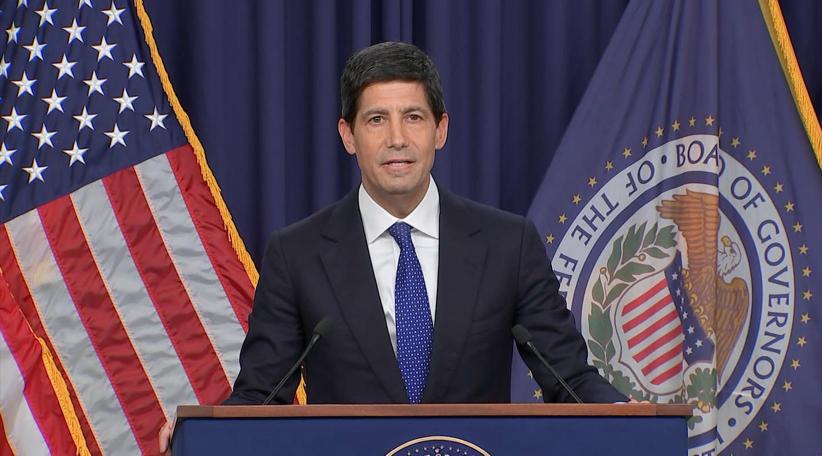
The Federal Reserve raised its benchmark interest rate for the first time since 2023 and signaled that another increase could come before the end of the year. The move strengthens the appeal of dollar-denominated assets and could increase pressure on emerging-market currencies and international borrowing costs.
WASHINGTON.– The Federal Reserve delivered a major shift in U.S. monetary policy on Wednesday, raising its benchmark interest rate by 25 basis points to a range of 3.75% to 4%, marking its first rate increase since July 2023.
The decision was unanimous and reflected policymakers' concern that inflation remains above the central bank's 2% target. The Federal Reserve said economic activity continues to expand at a solid pace, domestic spending remains resilient and productivity and capital investment are strong. At the same time, inflation remains elevated and policymakers said monetary policy must support a more timely return to price stability.
The bigger market story, however, may be what comes next. The Fed's latest projections point to the possibility of another rate increase before the end of 2026. Sixteen of the 18 policymakers who submitted rate projections see at least one additional increase this year, while the median projection points to a federal funds rate around 4.1% by year-end.
The dollar moves back into focus
The decision immediately affected currency markets. Reuters reported that the U.S. dollar strengthened against a basket of currencies following the announcement as investors assessed the possibility of additional increases in U.S. borrowing costs.
Higher U.S. interest rates can increase the relative attractiveness of dollar-denominated assets, potentially encouraging international investors to move capital toward U.S. markets. That dynamic can support the dollar while placing pressure on other currencies, particularly in economies that are more dependent on external financing.
The impact, however, will not necessarily be uniform. Exchange rates are also influenced by domestic monetary policy, inflation, economic growth, capital flows, commodity prices and geopolitical developments.
Emerging-market currencies face a new challenge
The potential consequences are particularly important for emerging markets.
A stronger dollar combined with higher U.S. interest rates can make dollar-denominated debt more expensive and reduce the relative attractiveness of investments in emerging economies. Countries with large external financing needs may therefore face greater pressure if global investors demand higher returns for taking additional risk.
That does not mean every emerging-market currency will automatically weaken. Other central banks may respond with their own monetary policies, while countries with strong external accounts, commodity revenues or substantial reserves may be affected differently.
But the direction of global financial conditions has changed.
Why Argentina is especially exposed
For Argentina, the Fed's decision could have consequences beyond the immediate movement of the peso.
Clarín reported that higher U.S. rates could strengthen the dollar globally, increase inflationary pressure in developing economies and raise borrowing costs for governments.
LA NACION reported that the dollar index initially climbed following the Fed announcement and cited analysts who expect potential pressure on emerging-market currencies, including the Argentine peso. The newspaper also highlighted the possibility of higher external financing costs for Argentina.
Argentina's exchange rate, however, will not be determined by the Federal Reserve alone. Domestic inflation, fiscal policy, reserves, export revenues, monetary policy, country risk and investor expectations will also play a role.
The Fed's move therefore does not automatically mean a new depreciation of the Argentine peso, but it does create a more challenging international financial environment.
Wall Street reacts
U.S. stocks also reacted to the prospect of higher rates.
According to AP, the S&P 500 fell about 0.4%, the Dow Jones Industrial Average dropped 631 points, or 1.2%, while the Nasdaq was nearly unchanged. Investors became more cautious after Fed Chair Kevin Warsh emphasized that inflation remains too high and suggested that the U.S. economy may be strong enough to withstand additional monetary tightening.
Reuters also reported declines across global equities and higher U.S. Treasury yields following the decision.
The immediate market reaction illustrates the significance of the Fed's message: investors are not simply responding to today's 25-basis-point increase, but to the possibility that U.S. interest rates could remain higher for longer.
A decision with global consequences
The Federal Reserve's decision comes at a particularly sensitive moment for the world economy, with geopolitical tensions and higher energy prices adding new inflationary pressures.
For the United States, higher rates are intended to slow demand and help bring inflation back toward the 2% target.
For the rest of the world, however, tighter U.S. monetary policy can mean a stronger dollar, higher financing costs and greater competition for global capital.
That combination is especially important for emerging economies and countries whose currencies are more vulnerable to changes in international capital flows.
The next question for global markets is whether the Fed will deliver another increase later this year or whether inflation will finally begin to moderate enough to halt the tightening cycle.
For now, the message from Washington is clear: the fight against inflation remains a priority, U.S. rates are moving higher again, and the dollar is once again at the center of the global financial equation.