- Region:
- America
- Category:
- Society
Powerful Aftershock Deepens Venezuela Earthquake Crisis as Death Toll Surpasses 1,700
-
![Powerful Aftershock Deepens Venezuela Earthquake Crisis as Death Toll Surpasses 1,700]()
Powerful Aftershock Deepens Venezuela Earthquake Crisis as Death Toll Surpasses 1,700
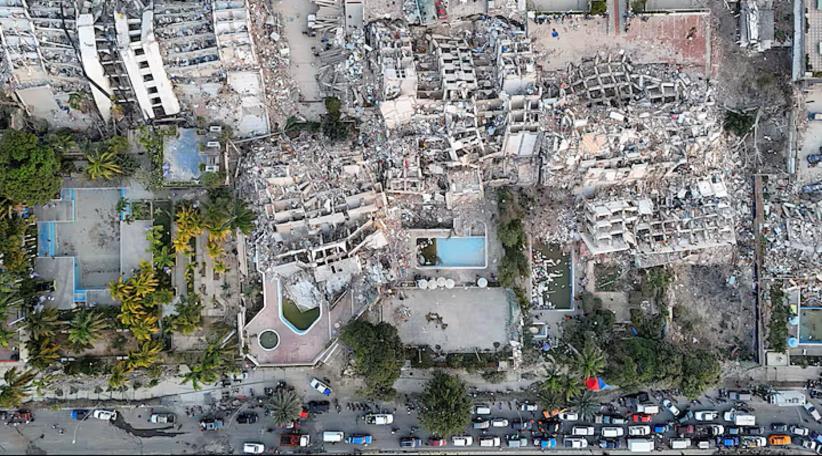
A strong aftershock struck northern Venezuela on Monday, reigniting fear among survivors just days after twin earthquakes devastated the country. Rescue teams continue searching for survivors as the humanitarian emergency worsens and international aid intensifies.
Caracas, Venezuela — Northern Venezuela was shaken by another powerful aftershock on Monday, sending thousands of frightened residents into the streets only five days after the country's deadliest earthquakes in more than a century left widespread destruction and a mounting humanitarian crisis.
The latest tremor, measured at magnitude 4.6 by the U.S. Geological Survey and 5.1 by Colombia's Geological Survey, was felt across Caracas and the heavily damaged coastal city of La Guaira, where rescue crews continue searching through collapsed buildings for survivors.
The aftershock triggered renewed panic among residents already traumatized by last week's twin earthquakes, which registered magnitudes 7.2 and 7.5 and have claimed at least 1,719 lives, according to official figures. More than 5,000 people have been injured, while tens of thousands remain missing and millions are affected by the disaster.
Fresh panic amid ongoing rescue efforts
Residents who have been sleeping in parks, tents and makeshift shelters rushed into open spaces as the ground began shaking again. Several Caracas Metro lines were temporarily suspended as authorities inspected infrastructure already weakened by the earlier earthquakes.
In the San Bernardino district of Caracas, search operations at the collapsed Rita apartment building were briefly halted as emergency crews assessed the impact of the latest seismic activity before resuming rescue operations.
Although Venezuelan authorities reported no immediate new structural damage, the aftershock underscored the continuing risks facing rescue teams and displaced families.
The rescue of a man and his teenage son alive from the rubble in La Guaira on Sunday offered a rare moment of hope. However, emergency responders acknowledge that the likelihood of finding additional survivors continues to diminish as more time passes.
International humanitarian response expands
The United Nations has intensified its support to Venezuela as humanitarian needs continue to grow.
UN officials announced the delivery of 10,000 body bags to assist local authorities if required, while emphasizing that they hope the final death toll remains well below that figure. The organization estimates that millions of people urgently require shelter, clean water, sanitation, healthcare and other essential services.
According to UN officials, 27 countries have deployed more than 2,000 rescue personnel, specialized search teams and over 160 rescue dogs to assist in ongoing operations.
The United States has also expanded its emergency assistance, doubling its humanitarian aid package to $300 million. The funding will support emergency medical care, food assistance, water and sanitation services, temporary shelter and logistical operations.
Meanwhile, U.S. military engineers completed repairs to the port of La Guaira, allowing humanitarian supplies to arrive more efficiently aboard the USS Fort Lauderdale, which has been dispatched to support relief efforts.
Growing humanitarian challenges
Thousands of displaced families continue living in public parks, schools and temporary shelters, fearing further building collapses as aftershocks persist.
Many survivors report shortages of tents, mattresses, food, drinking water and medical supplies, while humanitarian organizations warn that sanitation conditions are deteriorating rapidly.
In some of the hardest-hit neighborhoods, frustration has grown over what residents describe as a slow official response. Reports of looting in parts of La Guaira have added to security concerns as emergency operations continue.
Authorities have also temporarily restricted access for international journalists to some of the most heavily damaged areas, citing security reasons.
A country facing multiple crises
The earthquakes struck a nation already weakened by years of economic hardship, deteriorating infrastructure and an underfunded public health system.
The United Nations estimates that the physical damage caused by the disaster could exceed $6.7 billion, equivalent to approximately 6% of Venezuela's gross domestic product, making reconstruction one of the country's greatest challenges in decades.
As rescue teams continue their race against time, humanitarian agencies stress that the coming weeks will be critical not only for emergency relief but also for preventing secondary crises related to displacement, sanitation, disease and access to basic services.