- Region:
- Colombia
- Category:
- Society
Magnitude 7.4 Earthquake Strikes Western Colombia, Leaving Deaths, Injuries and Missing People in Coffee Region
-
![Magnitude 7.4 Earthquake Strikes Western Colombia, Leaving Deaths, Injuries and Missing People in Coffee Region.]()
Magnitude 7.4 Earthquake Strikes Western Colombia, Leaving Deaths, Injuries and Missing People in Coffee Region.
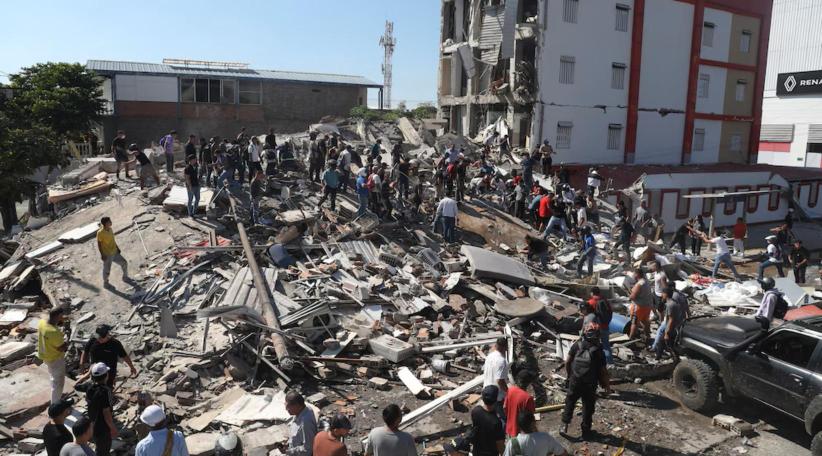
A powerful magnitude 7.4 earthquake struck western Colombia early Monday, just before 7:34 a.m. local time, with its epicenter near San José del Palmar in the department of Chocó and a depth of roughly 96 kilometers. Colombia's Geological Service (SGC) and the U.S. Geological Survey (USGS) both confirmed the magnitude of the quake, which was felt across at least nine departments, including Bogotá, Medellín, Cali, Manizales, Pereira, Armenia and Quibdó. Authorities described it as the strongest earthquake to hit Colombia so far this century.
The country's Coffee Region bore the brunt of the damage. In Manizales, the capital of Caldas department, the Metropolitan Cathedral Basilica of Our Lady of the Rosary sustained severe structural damage, while numerous buildings across the city were left with visible cracks and at risk of collapse. In Pereira, one of the hardest-hit cities, officials reported more than a dozen collapsed structures and dozens of injuries, while in Cali, Mayor Alejandro Eder confirmed roughly two dozen affected buildings, with people trapped under rubble and drone teams deployed to assess the damage from above.
Authorities confirmed that the earthquake left fatalities across several regions of the country, though officials stressed that the toll remains preliminary and is shifting rapidly as rescue operations continue. Alongside the deaths, officials report numerous injuries — several of them serious — and dozens of missing people, particularly in Pereira, where search and rescue teams are racing against time through collapsed buildings. In Chocó, Governor Nubia Carolina Córdoba confirmed injuries and severe housing damage in Quibdó, though she noted the situation is still being assessed department by department.
The quake was followed by at least two significant aftershocks, of magnitude 4.8 and 4.6, centered near San José del Palmar and Nóvita respectively, along with an additional 3.8 tremor recorded hours later. Colombia's Civil Aeronautics Authority suspended operations at the airports of Pereira, Manizales, Quibdó and Armenia as a precaution while runways and control towers are inspected.
President Abelardo De La Espriella activated a Unified Command Post (PMU) through the National Disaster Risk Management Unit (UNGRD) and announced he would personally lead the emergency response in Chocó, the Coffee Region and other affected areas. Military forces, including engineering battalion troops, began deploying to the hardest-hit regions to join search, rescue and humanitarian relief efforts. In Bogotá, Mayor Carlos Fernando Galán said no major structural damage had been reported in the capital so far, though thousands of residents evacuated buildings and homes as a precaution.
The disaster prompted a wave of international solidarity, with public messages of support from figures including Marc Anthony, David Bisbal, Camilo and J Balvin, as local and international relief agencies mobilize to reinforce assistance in what is emerging as one of Colombia's worst natural disasters in recent years.