- Region:
- USA
- Category:
- Society
Estimated 73% of US now immune to omicron
-
![Estimated 73% of US now immune to omicron]()
Top U.S. infectious disease expert Dr. Anthony Fauci said on Wednesday that it is time for the United States to start inching back towards normality, despite remaining risks from COVID-19. Estimated 73% of US now immune to omicron
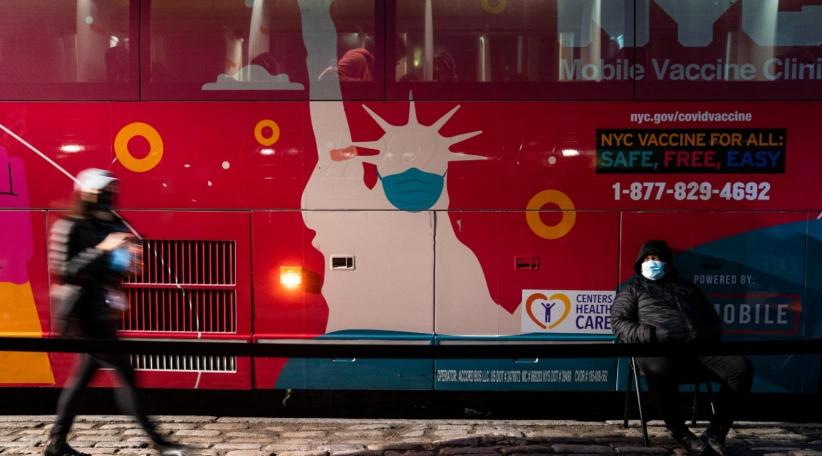
Top U.S. infectious disease expert Dr. Anthony Fauci said on Wednesday that it is time for the United States to start inching back towards normality, despite remaining risks from COVID-19.
The omicron wave that assaulted the United States this winter also bolstered its defenses, leaving enough protection against the coronavirus that future spikes will likely require much less — if any — dramatic disruption to society.
Millions of individual Americans’ immune systems now recognize the virus and are primed to fight it off if they encounter omicron, or even another variant.
About half of eligible Americans have received booster shots, there have been nearly 80 million confirmed infections overall and many more infections have never been reported. One influential model uses those factors and others to estimate that 73% of Americans are, for now, immune to omicron, the dominant variant, and that could rise to 80% by mid-March.
This will prevent or shorten new illnesses in protected people and reduce the amount of virus circulating overall, likely tamping down new waves. Hospitals will get a break from overwhelmed ICUs, experts agree.
Scientists at Johns Hopkins Bloomberg School of Public Health estimate that about three out of four people in the United States will have been infected by omicron by the end of the surge.
"We know it’s a huge proportion of the population," said Shaun Truelove, an epidemiologist and disease modeler at Johns Hopkins. "This varies a lot by location, and in some areas we expect the number infected to be closer to one in two."
That means different regions or groups of people have different level of protection — and risk. In Virginia, disease modelers are thinking about their population in terms of groups with different levels of immunity.
They estimate about 45% of Virginians have the highest level of immunity through boosted vaccination or through vaccination plus a recent infection with omicron. Another 47% have immunity that has waned somewhat; and 7% are the most vulnerable because they were never vaccinated and never infected.
In all, the vast majority of Virginians have at least some immunity, said Bryan Lewis, a computational epidemiologist who leads University of Virginia's COVID-19 modeling team.
"That’s going to be a nice shield of armor for our population as a whole," Lewis said. "If we do get to very low case rates, we certainly can ease back on some of these restrictions."
Still, while the population is better protected, many individuals are not. Even by the most optimistic estimates for population immunity, 80 million or so Americans are still vulnerable. That's about the same as the total number of confirmed infections in the U.S. during the pandemic.