- Region:
- World
- Category:
- Society
Pfizer vaccine protects against new Covid variants, study suggests
-
![Pfizer vaccine protects against new Covid variants, study suggests]()
Blood sample tests from 20 people show vaccine is effective against UK and South Africa variants Pfizer vaccine protects against new Covid variants, study suggests
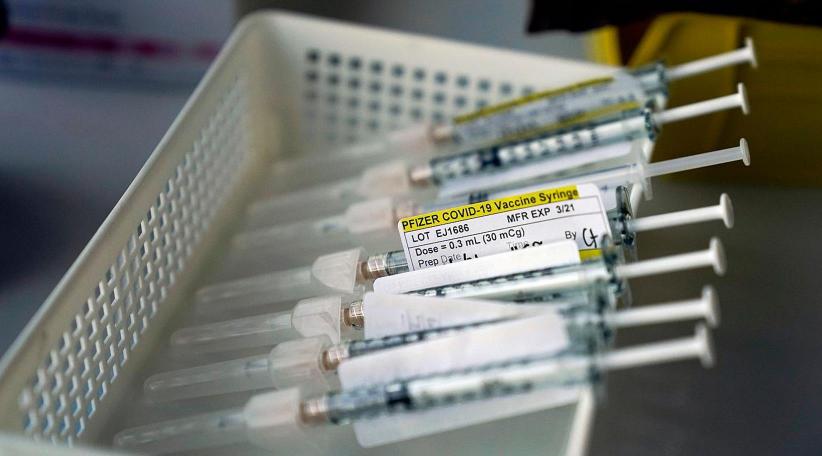
Blood sample tests from 20 people show vaccine is effective against UK and South Africa variants
The Covid-19 vaccine from Pfizer and BioNTech appears to protect against a mutation in two coronavirus variants that are causing rapid spread across the UK, research suggests.
The pharmaceutical company and researchers from the University of Texas medical branch carried out lab tests on the variants, one of which was found in the UK while the other originated in South Africa.
Both contain mutations including N501Y, an alteration in the spike protein of the virus, which is a target for vaccines.
In the study, which has not yet been peer-reviewed, blood samples were taken from 20 people who received the Pfizer/BioNTech vaccine.
Laboratory studies found that the samples had neutralising levels of antibodies which appeared to work against N501Y in the new variants. However, one of the mutations in the South Africa one, named E484K, has not yet been studied.
Pfizer said it had tested 16 different mutations in the strains and none of them have had any significant impact on how the vaccine works.
Further studies are planned on the other mutations.
Earlier this week, the UK’s chief scientific adviser, Sir Patrick Vallance, said it might be that the new strains reduce the efficacy of vaccines but that more studies were needed.
Scientists gave the study a cautious welcome but said further research was needed.
Daniel Altmann, professor of immunology at Imperial College London, said: “This is indeed an important finding to calm any concerns about lack of vaccine coverage for the variants.”
He added that “neutralisation of the variant looks excellent from this study”.
Ravi Gupta, a professor of microbiology at the University of Cambridge, said the research was lacking and looked at only one mutation “which was not expected to have significant impact alone”.
Eleanor Riley, a professor of immunology and infectious disease at the University of Edinburgh, said: “So far, so good. There will be other new mutants and we will need to monitor the situation carefully by repeating this type of study on new variants as they appear. It may be necessary to tweak the vaccine over time.
“To inject a little optimism into the discussion: there is a limit to the number of mutations the virus can accumulate and still be able to bind to the receptor (which allows the virus to infect people).”
Stephen Evans, a professor of pharmacoepidemiology at the London School of Hygiene & Tropical Medicine, said: “This is good news, mainly because it is not bad news.
“Had the opposite result been found, that the vaccine did not seem to have efficacy against the variation of the virus studied, that would have been bad and very concerning.
“So, yes this is good news, but it does not yet give us total confidence that the Pfizer (or other) vaccines will definitely give protection.
“We need to test this in clinical experience and the data on this should be available in the UK within the next few weeks.”