- Región:
- America
- Categoría:
- Politics
Trump Escalates Pressure on Venezuela, Declares Its Airspace “Completely Closed”
-
![Trump Escalates Pressure on Venezuela, Declares Its Airspace “Completely Closed”]()
Trump Escalates Pressure on Venezuela, Declares Its Airspace “Completely Closed”
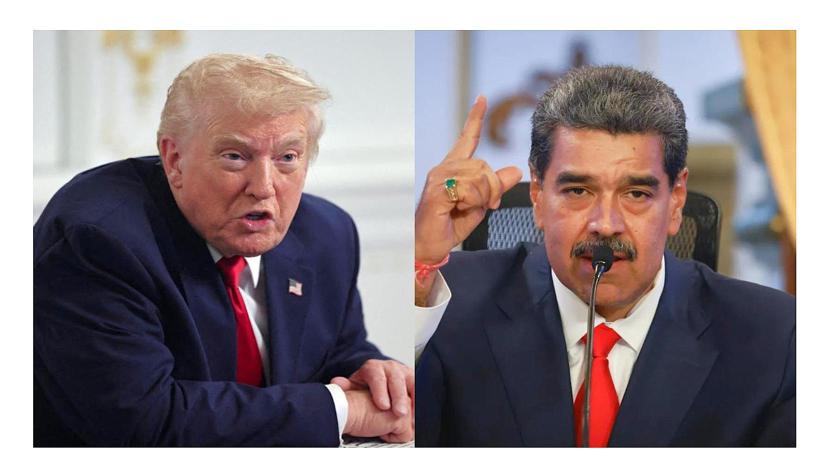
The United States intensified its pressure campaign on Venezuela on Saturday after President Donald Trump declared that the airspace “above and surrounding” the country should be considered “closed in its entirety.” The directive, published on Trump’s platform Truth Social, immediately raised questions about the scope of U.S. authority and the administration’s broader strategy to force Venezuelan President Nicolás Maduro from power.
Venezuela swiftly condemned the statement. Foreign Minister Yván Gil described Trump’s comments as a “colonialist threat” and an “extravagant, illegal and unjustified aggression against the people of Venezuela,” accusing Washington of attempting to undermine the country’s sovereignty.
The White House offered no clarification, leaving uncertainty over whether Trump was announcing a new policy or reinforcing the administration’s existing pressure tactics. These tactics have included expanded naval deployments in the Caribbean and eastern Pacific, aggressive anti-drug-trafficking operations, and a growing intelligence footprint in the region. Since early September, more than 80 people have died during maritime interdictions linked to U.S. operations.
Unclear Authority, Mounting Risks
Although the U.S. Federal Aviation Administration (FAA) can issue warnings, Washington cannot unilaterally shut down another nation’s airspace. Last week, the FAA cautioned commercial airlines about a “potentially hazardous situation” when flying over Venezuela. While direct U.S. flights to Venezuela have been suspended since 2019, several American carriers still use Venezuelan airspace for routes to South America.
Trump’s comments come as the administration openly expands its intelligence and military involvement. The president acknowledged he had authorized CIA operations inside Venezuela, and earlier this week he designated Maduro’s government as a foreign terrorist organization — a move that senior officials said would widen U.S. options for potential strikes.
On Thanksgiving Day, Trump hinted at imminent land operations, telling American service members that drug traffickers were increasingly deterred by U.S. maritime actions and that “we’ll be starting to stop them by land also.”
Military Build-Up and Domestic Support
As part of “Operation Southern Spear,” the Pentagon has deployed more than a dozen warships and 15,000 troops to the region. Republican Senator Lindsey Graham praised Trump’s stance, calling Venezuela the “chief” threat among what he labeled “drug caliphate countries” in the Western Hemisphere.
Maduro, meanwhile, has attempted to project resolve. In a televised address to the armed forces, he urged soldiers to remain vigilant and “ready to defend our right as a nation,” calling Venezuela a “republic in arms.”
Behind the scenes, diplomatic communication channels remain uncertain. While the Trump administration officially severed dialogue with Caracas in October, the president revealed last week that Maduro had expressed interest in resuming talks. Trump later said he would be willing to speak with the Venezuelan leader “at a certain time.”
Both The New York Times and The Wall Street Journal reported that the two leaders spoke by phone last week, though neither government has confirmed the call publicly.
A Nation Caught Between Fear and Fatigue
Inside Venezuela, reactions to Trump's directive reflect a climate of anxiety and resignation. After years of economic collapse, mass protests, failed uprisings and persistent misinformation, many Venezuelans say they no longer know what to expect from escalating tensions.
“Will they bomb? Will they not bomb? Nobody knows anything,” said Marilyn, a waitress in Caracas who asked to use only her first name for fear of government retaliation.
While U.S. threats have not yet produced concrete changes in daily life, state repression remains intense. Human rights group PROVEA reported that at least 54 people were detained in October alone for expressing dissent, including individuals arrested for sharing anti-Maduro messages on WhatsApp.
Publicly, the atmosphere in Caracas appears almost normal as Christmas decorations and Black Friday sales share the spotlight with Maduro’s frequent televised speeches. On Monday, the Venezuelan president insisted that no matter what the U.S. does, “they will not be able to defeat Venezuela,” calling the nation “invincible.”