- Region:
- USA
- Category:
- Tourism
Geoff Freeman Warns U.S. Policies Could Drive Tourists Away
-
![Geoff Freeman Warns U.S. Policies Could Drive Tourists Away.]()
Geoff Freeman Warns U.S. Policies Could Drive Tourists Away.
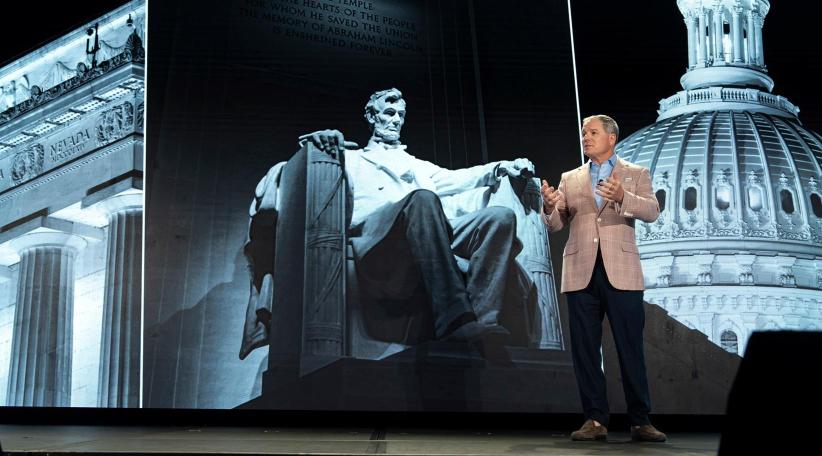
The U.S. Travel Association president and CEO says potential travel barriers could undermine the country’s goal of attracting 100 million international visitors annually by 2030. His warning follows the WTTC Global Summit in Malta, as concerns grow over the performance of inbound tourism.
The United States wants to attract 100 million international visitors a year by 2030, but some of its own policies could discourage travelers from coming. That is the warning from Geoff Freeman, president and CEO of the U.S. Travel Association, in a LinkedIn post published on October 16, one week after his participation in the World Travel & Tourism Council (WTTC) Global Summit in Malta.
“An advantage is not a strategy,” Freeman wrote, arguing that world-class destinations and major international events are not enough to guarantee that travelers will choose the United States.
He pointed to several measures that he believes could weaken the country’s competitiveness, including potential social media screening requirements for travelers who currently do not need visas, cuts to international tourism promotion funding, and the possible expansion of financial guarantee requirements for certain visa applicants.
The warning comes as the United States prepares to host a series of major events, including the 2026 FIFA World Cup, celebrations marking the country’s 250th anniversary of independence, and the 2028 Olympic and Paralympic Games in Los Angeles. These events offer significant opportunities to attract visitors, but Freeman argues that the country must also make it easier for international travelers to enter.
The 100 million visitor target
The U.S. Travel Association estimates that reaching 100 million annual international visitors by 2030 could generate an additional US$81 billion in visitor spending and support more than 400,000 jobs. The target was also discussed during a September meeting between travel industry leaders and President Donald Trump at the White House.
Recent inbound tourism figures, however, have raised concerns across the industry. Data cited during coverage of the WTTC summit showed that international arrivals to the United States fell 5.5% in 2025, while spending by international visitors dropped 4.6% to US$176 billion.
Freeman has also criticized cuts to federal funding for Brand USA, the organization responsible for promoting the United States internationally. Under legislation passed in 2025, its funding fell from as much as US$100 million annually to US$20 million, limiting the resources available to compete with other destinations.
A challenge beyond promotion
At the Malta summit, Nick Adams, the U.S. special presidential envoy for Tourism, Excepcionalism and American Values, highlighted the country’s tourism potential and the opportunity to use major sporting and cultural events to attract international visitors.
Freeman’s message points to a key challenge for that strategy: marketing alone will not be enough if entry requirements, costs or uncertainty discourage people from traveling.
With the 2026 FIFA World Cup approaching, the United States has a global platform to showcase its destinations and generate tourism spending and jobs. But the U.S. Travel Association chief’s warning is clear: the country’s attractions will not guarantee success if the conditions for visiting become less competitive.
The global race for international travelers is already underway. For the United States, the challenge is not just to show the world what it has to offer, but to ensure that people who want to visit can do so with fewer obstacles.