- Region:
- USA
- Category:
- Politics
Trump announces “unprecedented” economic offensive to isolate Iran
-
![Trump announces “unprecedented” economic offensive to isolate Iran.]()
Trump announces “unprecedented” economic offensive to isolate Iran.
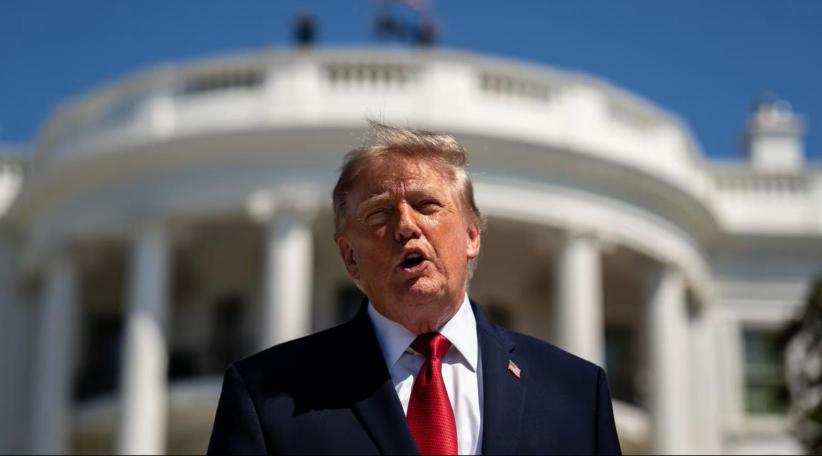
The U.S. president warned that countries and entities providing financial or economic support to Tehran could face severe consequences as Washington seeks to cut Iran’s oil revenues and financial networks.
Washington. U.S. President Donald Trump has announced a new economic offensive against Iran that he described as “unprecedented,” warning that countries and entities that continue to provide financial or commercial support to Tehran could face economic consequences.
The move represents a new shift in Washington’s strategy toward Iran as military and diplomatic tensions continue to escalate across the Middle East. Trump said the objective is to cut off the main channels that allow the Islamic Republic to generate revenue and sustain its economy despite decades of sanctions.
“Oil smuggling, swap lines, cash transfers, money exchanges, ship registries, shell companies: all of this must end NOW,” Trump said in a post on Truth Social.
Pressure on oil, banks and companies
The new campaign is aimed at mechanisms Iran has used to circumvent international sanctions, including oil trading networks, currency operations, cash transfers and corporate structures designed to conceal the origin of funds.
Trump also made clear that the pressure will not necessarily be limited to Iran. The United States could target financial institutions, companies, airports and government entities in third countries that Washington believes are providing economic support to Tehran.
U.S. Treasury Secretary Scott Bessent had already warned last week that Washington was preparing measures that he said would represent an unprecedented level of economic isolation against Iran.
Strait of Hormuz remains at the center of the crisis
The new economic offensive comes as the dispute over the Strait of Hormuz, one of the world’s most important energy corridors, continues.
Trump has insisted that the strategic waterway remains open, while Iran says it will remain closed until the United States meets conditions linked to an interim agreement reached in June.
The uncertainty is already affecting global energy markets. On Thursday, Brent crude rose above $94 a barrel, while U.S. West Texas Intermediate also posted significant gains as concerns over supply disruptions increased.
The Strait of Hormuz is particularly important because disruptions to shipping through the waterway can quickly affect global oil supplies, transportation costs and inflation.
China could become a key pressure point
One of the biggest challenges for Washington will be China, one of Iran’s main oil customers.
A tougher enforcement strategy could involve sanctions against Chinese entities involved in transactions linked to Iranian crude, potentially adding another source of tension between Washington and Beijing.
The timing is particularly sensitive because Trump is expected to host Chinese President Xi Jinping for a state visit in September.
Can economic pressure force Iran to change course?
The Trump administration is betting that intensified economic isolation will eventually push Tehran back toward negotiations over its nuclear program and the broader conflict.
But there are significant doubts about how quickly such a strategy could produce results.
Iran has lived under extensive international sanctions for decades and has developed commercial and financial networks designed to reduce their impact. The current conflict has also increased uncertainty surrounding energy markets and maritime security.
Analysts have warned that sustained economic pressure could deepen inflation, accelerate capital flight and increase stress on Iran’s financial system, but that does not necessarily mean the Iranian government would quickly surrender or change its strategy.
A new phase in the conflict
Trump’s announcement opens a new phase in the confrontation between the United States and Iran, with economic warfare becoming an increasingly important component of the conflict.
Washington is seeking to prevent Tehran from accessing alternative sources of financing, while Iran continues to reject U.S. pressure and tensions surrounding the Strait of Hormuz remain a major concern for global trade and energy markets.
The response from China and other countries trading with Iran, the enforcement of new U.S. sanctions and developments around the Strait of Hormuz will be critical in determining whether Trump’s economic strategy can significantly weaken Tehran — and how much it could affect the global economy.