- Region:
- USA
- Category:
- Politics
Trump Says America Will Never Forget 9/11 as US Marks 25 Years Since the Attacks
-
![Trump Says America Will Never Forget 911 as US Marks 25 Years Since the Attacks.]()
Trump Says America Will Never Forget 911 as US Marks 25 Years Since the Attacks.
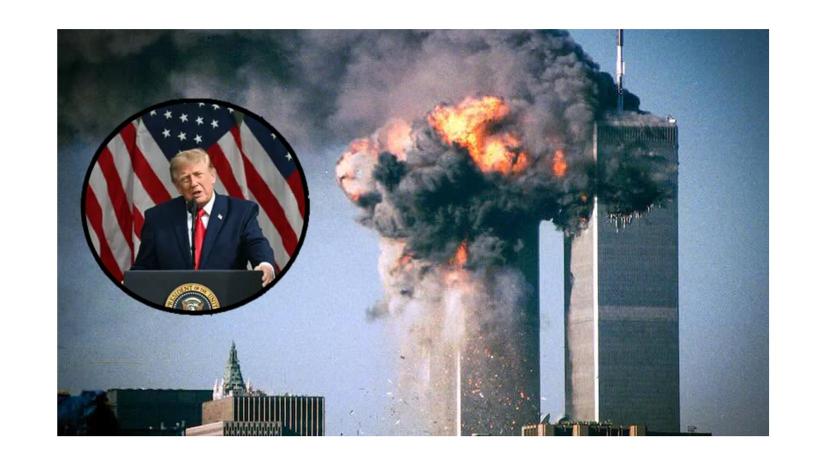
President Donald Trump honored the victims of the September 11 attacks during a solemn ceremony at the Pentagon, where he also linked the legacy of 9/11 to current security threats and reiterated that Iran must never obtain a nuclear weapon.
The United States marked the 25th anniversary of the September 11, 2001 terrorist attacks with ceremonies in New York, at the Pentagon and in Pennsylvania, as Americans remembered the nearly 3,000 people killed on a day that reshaped the country and transformed global security.
President Donald Trump chose to attend the commemoration at the Pentagon, where 184 people were killed in the attack involving American Airlines Flight 77. Accompanied by First Lady Melania Trump, the president paid tribute to the victims, their families, first responders and those who have carried the consequences of September 11 for a quarter of a century.
“Today, we renew the sacred pledge that we first made in their names a quarter century ago. We will never, ever forget,” Trump said, according to international reports from the ceremony.
The president's remarks came as ceremonies across the country reflected both the personal grief of families and the broader historical consequences of the attacks. In New York, Vice President JD Vance joined former Presidents Bill Clinton, George W. Bush, Barack Obama and Joe Biden at the National September 11 Memorial, creating a rare gathering of political leaders from different generations and parties.
At Ground Zero, the names of those killed were read aloud, while moments of silence marked the sequence of events that unfolded on September 11, 2001. Memorials were also held near Shanksville, Pennsylvania, where United Airlines Flight 93 crashed after passengers resisted the hijackers.
Iran and the continuing security debate
Trump used his Pentagon address not only to remember the victims but also to connect the anniversary with present-day national security concerns.
The president praised U.S. military personnel working to ensure that Iran, which his administration describes as a leading state sponsor of terrorism, does not obtain a nuclear weapon. Defense Secretary Pete Hegseth also referred to continuing threats from extremist groups and hostile actors during the ceremony.
The comments underscored how, 25 years after 9/11, terrorism, military intervention and security policy remain central to American political debate. The attacks triggered the U.S.-led war on terror, the invasion of Afghanistan and sweeping changes in intelligence, aviation security and international cooperation.
On September 11, 2001, al-Qaida hijackers seized four commercial aircraft. Two planes struck the World Trade Center's Twin Towers in New York, another hit the Pentagon and a fourth, United Airlines Flight 93, crashed in Pennsylvania.
The attacks killed 2,977 people and changed the United States' relationship with the world. Their consequences continue to be felt in foreign policy, military strategy, airport security and the lives of survivors and first responders.
Twenty-five years later, the anniversary carried a message of remembrance, resilience and national memory. For families who lost loved ones, September 11 remains deeply personal. For a new generation born after the attacks, the challenge is preserving the memory and understanding the global consequences of a day that changed history.