- Región:
- Caribbean
- Categoría:
- Tourism
Saint-Martin positions itself as a Caribbean destination offering boutique hotels, excellent gastronomy and high-quality tourism services
-
![Saint-Martin positions itself as a Caribbean destination offering boutique hotels, excellent gastronomy and high-quality tourism services.]()
Saint-Martin positions itself as a Caribbean destination offering boutique hotels, excellent gastronomy and high-quality tourism services.

The French side of the island is promoting a tourism offering that combines personalized hospitality, outstanding culinary diversity, beaches and experiences connected to local culture. During a week-long visit, the ABC Mundial team explored the destination and experienced a tourism model designed to attract higher-value visitors interested in enjoying the Caribbean identity, European influences and international standards.
In a Caribbean region where many destinations have developed their tourism industries around large hotel complexes and all-inclusive systems, the French side of Saint-Martin offers a different model. Boutique hotels, gastronomy, a wide variety of restaurants and opportunities to connect with local identity form an offering designed to stand out and attract travelers interested in experiencing more than just its beaches.
During this week, the ABC Mundial team explored Saint-Martin and witnessed some of the defining features of its tourism proposition: smaller hotels, quality breakfasts, personalized service and a culinary scene that encourages visitors to venture beyond their accommodation and discover different corners of the island.
Unlike other Caribbean destinations, where visitors often spend much of their stay within the hotel where they are staying, in Saint-Martin the experience extends to a wide network of independent restaurants. Many hotels have their own dining options, but this does not limit guests' choices. They can find alternatives for every occasion, from traditional Creole cuisine to restaurants inspired by French, Italian and international cooking.
Gastronomy as an expression of identity and differentiation
The combination of Caribbean flavors, Creole traditions and French culinary techniques creates a distinctive gastronomic identity, complemented by international influences and a strong presence of grilled dishes and barbecue.
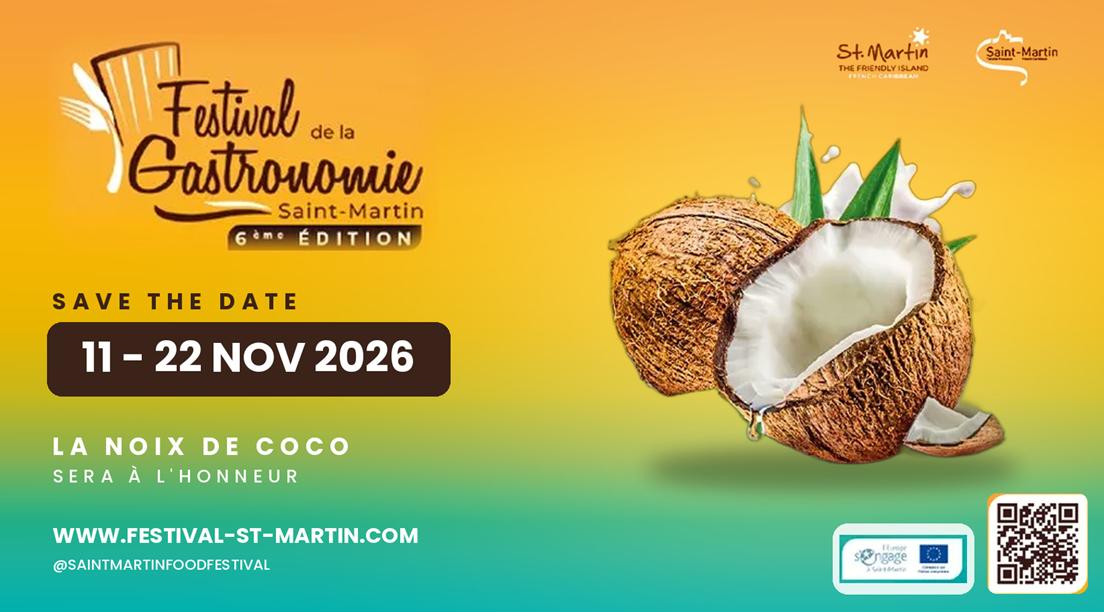
This characteristic was particularly evident during our visit, which coincided with the sixth edition of the Saint-Martin Gastronomy Festival, an event that brought together chefs from different countries and transformed the island into a showcase for culinary competitions, tastings and gastronomic activities.
The participation of local restaurants and guest chefs from France, Canada, Italy, the United States and other markets highlighted the diversity of an offering that has become one of the destination's main points of differentiation.
Valérie Damaseau, President of the Saint-Martin Tourist Office, emphasized gastronomy as one of the island's major distinguishing features. Referring to its culinary diversity, she pointed to the coexistence of traditional flavors, such as sea snails, fish, rice and beans, and plantains, alongside international cuisine. Her words capture this identity: “There is food for everyone here. You can find everything from French and Italian gastronomy to an enormous variety of cuisines.”
Along the same lines, Emile Louisy, responsible for the Brazil, Latin American and cruise markets at the Tourist Office, highlighted the cultural blend that characterizes local gastronomy: “It is a mixture of Caribbean, European and international cuisine, but all the dishes have a local flavor.” This is also a distinctive attraction for Latin American travelers, thanks to the combination of Caribbean traditions and European influences.
Meanwhile, Aïda Weinum, Director of the Tourist Office, stressed the importance of preserving and promoting this identity: “The sea, the sun and the sand are part of what we offer, but we are also proud of the quality and diversity of our gastronomy.”
Saint-Martin's ambition to be recognized as the gastronomic capital of the Caribbean may spark debate and comparisons with other islands in the region. Nevertheless, the diversity of its restaurants, the participation of international chefs and the strength of its own culinary culture demonstrate a clear commitment to building a tourism identity around food.
Boutique hotels and travelers seeking experiences
The hotel sector supports this strategy. On the French side, smaller establishments, boutique hotels, residences and guesthouses predominate, prioritizing personalized service, surroundings and the overall quality of the guest experience.
The goal is not simply to offer a room overlooking the sea or a swimming pool surrounded by tropical vegetation. The proposition is to provide visitors with a comprehensive experience, combining excellent gastronomy, beaches, services, activities and opportunities to explore the island.
In this respect, the fact that many establishments do not operate under an all-inclusive system encourages visitors to explore local restaurants and businesses, extending the economic benefits of tourism to other sectors.
Beaches, water sports and cultural diversity
Naturally, Saint-Martin's appeal is also closely linked to its beaches, Caribbean climate, sunshine throughout much of the year and the opportunities offered by the sea. Water sports, sailing, excursions, diving and recreational activities complement an offering that allows visitors to combine relaxation and adventure.
The territory has 37 beaches, reflecting the variety of coastal landscapes available to visitors. Added to this is remarkable cultural diversity: more than 120 nationalities live on the island, bringing together different languages, customs and traditions.
Louisy highlighted this diversity as one of the destination's greatest attractions. Saint-Martin promotes itself internationally under the concept of The Friendly Island. The coexistence of cultures and the welcoming nature of its people are an essential part of the experience it seeks to offer visitors.
Another important factor for travelers is the freedom to explore the territory. Renting a car is particularly convenient for discovering different beaches, restaurants, towns and landscapes. A wide range of car rental companies makes it easier to get around and allows visitors to organize their stay without relying exclusively on organized excursions or transfers.
International connectivity also plays a fundamental role. Although the French side has its own regional airport, Grand Case-Espérance, many international travelers arrive through Princess Juliana International Airport, located in the Dutch territory of Sint Maarten, which serves as the island's main international air gateway.
This feature, combined with the possibility of traveling between the two territories, is an advantage for visitors wishing to discover both sides of a Caribbean destination with distinct institutional and cultural identities.
An economy seeking growth through quality tourism
Saint-Martin is a French overseas collectivity, with Marigot as its administrative capital. It has autonomy to develop many of its economic and tourism policies, uses the euro and has its own institutional structure, while remaining part of the French Republic.
Tourism is one of the main drivers of its economy, generating activity for hotels, restaurants, shops, transportation companies and numerous visitor-related services.
According to 2025 economic figures, the entire island, including both the French and Dutch territories, received more than 2.57 million visitors, combining cruise passengers and air arrivals, representing year-on-year growth of 15.7%.
However, the French side's positioning reflects a particular ambition: to develop a differentiated offering and increase the value of each visitor experience.
The challenge is not simply to increase visitor numbers. The strategy also aims to attract travelers with greater spending power who are interested in gastronomy, quality accommodation, authentic experiences and respect for the natural environment.
Sustainability, the protection of beaches and natural areas, and planning that makes it possible to balance tourism growth with residents' quality of life are central issues for the destination's future.
The ABC Mundial team's visit showed that Saint-Martin has strong arguments to compete in a segment increasingly valued by international travelers: those who are not simply looking for a beach destination, but for a place where hospitality, gastronomy, culture, nature and the opportunity to discover different experiences come together in a single trip.
In Saint-Martin, the Caribbean is also enjoyed around a table, in a small boutique hotel, while exploring its towns and discovering a culinary culture that aspires to become one of the region's leading gastronomic references.