- Región:
- USA
- Categoría:
- Business
Rising Fuel Prices Put Pressure on U.S. Airlines as Middle East Tensions Escalate
![Rising Fuel Prices Put Pressure on U.S. Airlines as Middle East Tensions Escalate.]()
Rising Fuel Prices Put Pressure on U.S. Airlines as Middle East Tensions Escalate.
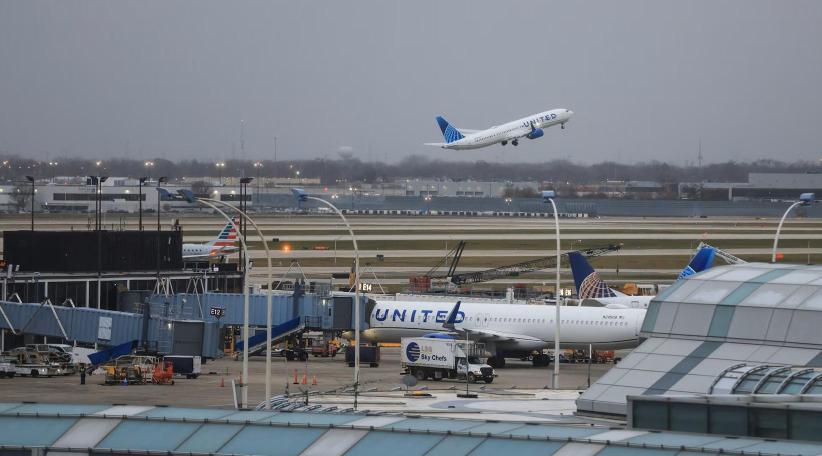
Major U.S. airlines are facing increasing financial pressure as jet fuel prices surge amid escalating tensions involving Iran, Israel, and the United States. Analysts warn that the aviation industry could see shrinking margins and potentially higher airfares if energy prices remain elevated in the coming months.
Fuel is one of the largest operating expenses for airlines, typically accounting for 20% to 30% of total costs. In recent days, jet fuel prices in the U.S. have climbed above $4 per gallon, one of the highest levels recorded since 2022. Market volatility has intensified due to concerns over possible disruptions in global oil supply routes, particularly in the Strait of Hormuz, a strategic maritime passage through which roughly 20% of the world’s oil supply flows.
The geopolitical uncertainty has pushed aviation fuel prices up by an estimated 15% in some markets following recent military escalations involving Iran. If the crisis persists, energy analysts believe crude oil prices could once again approach or exceed $100 per barrel, a level that historically puts significant pressure on airline profitability.
U.S. airlines more exposed to fuel price volatility
A key factor increasing the vulnerability of U.S. carriers is their limited use of fuel hedging, a financial strategy used by many airlines to protect against fluctuations in fuel prices.
Major carriers such as Delta Air Lines, American Airlines, United Airlines, Southwest Airlines, and JetBlue largely abandoned hedging strategies over the past two decades after experiencing losses when oil prices dropped sharply in previous cycles.
As a result, U.S. airlines are currently more exposed to fuel price volatility than many of their European and Asian competitors. Several major European carriers, including Lufthansa and Air France-KLM, reportedly have between 60% and 80% of their fuel needs hedged for 2026, providing them with greater protection against sudden price spikes.
Delta’s refinery offers partial protection
One notable exception within the U.S. market is Delta Air Lines, which owns the Trainer Refinery in Pennsylvania. This asset provides the airline with a degree of supply control and cost stabilization.
However, industry analysts caution that even this advantage offers only partial protection against broader market trends. If crude oil and jet fuel prices continue to climb, all carriers will likely feel the impact.
Potential impact on airfares and profitability
Industry estimates suggest that if fuel prices remain elevated for an extended period, U.S. airlines could face up to $5.8 billion in additional annual fuel costs. This scenario could significantly reduce industry profitability and potentially force airlines to adjust ticket pricing.
Executives in the sector have already begun warning about possible fare increases. The CEO of United Airlines recently indicated that higher ticket prices could emerge in the near future if fuel costs remain at current levels.
A critical moment for the aviation sector
For the aviation industry, the situation highlights the strong connection between geopolitics and airline economics. As global tensions influence energy markets, airlines must balance rising operational costs with competitive pricing in a highly price-sensitive travel market.
If the current geopolitical crisis continues to disrupt energy markets, analysts expect airfare increases, reduced profit margins, and continued volatility across the global airline industry in the months ahead.