- Region:
- USA
- Category:
- Business
Black Friday: The United States experiences a day of shopping, long lines and increasingly cautious consumers
-
![Black Friday: The United States experiences a day of shopping, long lines and increasingly cautious consumers.]()
Black Friday: The United States experiences a day of shopping, long lines and increasingly cautious consumers.
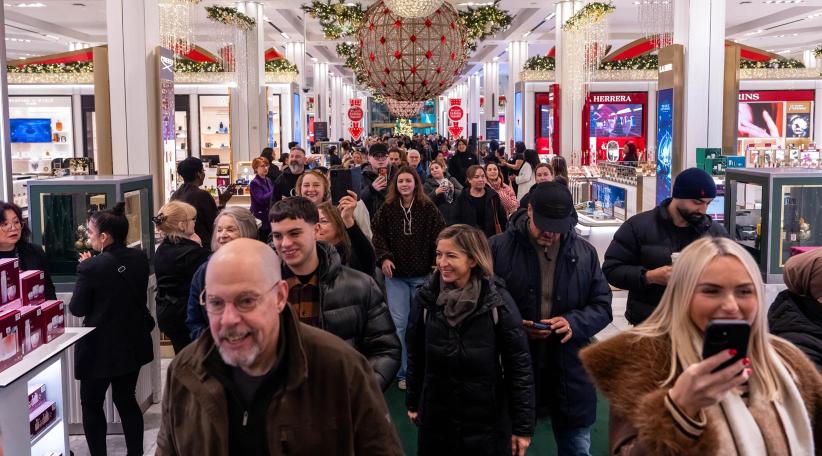
The traditional shopping event takes place this Friday, November 27, one day after Thanksgiving. Although promotions began weeks ago and online shopping continues to gain ground, physical stores are still attracting thousands of customers. U.S. retailers expect holiday-season sales to surpass the $1 trillion mark.
UNITED STATES. — The traditional Black Friday is underway across the United States. Since the early hours of this Friday, thousands of shoppers have returned to stores and shopping centers to take advantage of the promotions that mark the busiest start of the holiday shopping season. Lines outside major retailers, early store openings and the search for bargains have once again become part of a familiar annual scene, even as e-commerce continues to transform the way Americans shop.
In New York, one of the day's most iconic locations was Macy's Herald Square in Manhattan, where shoppers began lining up before sunrise. The store opened its doors at 6 a.m., welcoming customers eager to take advantage of special offers. The tradition of shopping immediately after Thanksgiving dinner remains strong, even though many promotions have been available online for several weeks. According to retail technology company Sensormatic Solutions, Black Friday continues to attract more shoppers to physical stores than any other day of the year in the United States.
However, the shopping phenomenon is no longer limited to a single day. Major retailers such as Amazon, Walmart, Target and Best Buy launched their campaigns earlier in November, extending promotions throughout the month and into the weekend, leading up to Cyber Monday on November 30. Electronics, televisions, toys, clothing, home goods and beauty products are among the categories attracting considerable consumer interest. Artificial intelligence tools are also becoming increasingly relevant, helping shoppers compare prices, discover products and identify deals.
The figures reflect the economic importance of the season. According to Adobe data cited by Reuters, online spending on Thanksgiving Day reached approximately $7.1 billion, up 10.4% compared with the previous year. For Black Friday, Adobe initially projected online sales of $12.9 billion, a 9.2% increase over 2025. Meanwhile, the National Retail Federation (NRF) expects U.S. retail sales in November and December to exceed $1 trillion, representing year-over-year growth of 4.2%.
Behind these positive forecasts, however, lies a more complex economic reality. Inflation and the cost of living are prompting many households to monitor their spending, compare prices and prioritize essential purchases over impulse buying. An NRF survey found that 82% of consumers are taking steps to manage their holiday budgets, including choosing less expensive gifts. Reuters has also pointed out that part of the projected increase in sales reflects higher prices rather than necessarily a greater volume of purchases.
Black Friday therefore retains its position as one of the most important events on the U.S. retail calendar, but its format has changed. Crowds in physical stores now coexist with millions of online transactions, promotions stretch across several weeks, and consumers approach the event with more information and greater attention to prices. The shopping period also