- Region:
- Caribbean
- Category:
- Tourism
Antigua and Barbuda to Host SOTIC 2027: Charles Fernandez Calls for Stronger Caribbean Tourism Cooperation and Sustainability
-
![Antigua and Barbuda to Host SOTIC 2027: Charles Fernandez Calls for Stronger Caribbean Tourism Cooperation and Sustainability.]()
Minister of Tourism, Investment, Transportation and Aviation Charles “Max” Fernandez. Antigua and Barbuda to Host SOTIC 2027: Charles Fernandez Calls for Stronger Caribbean Tourism Cooperation and Sustainability.
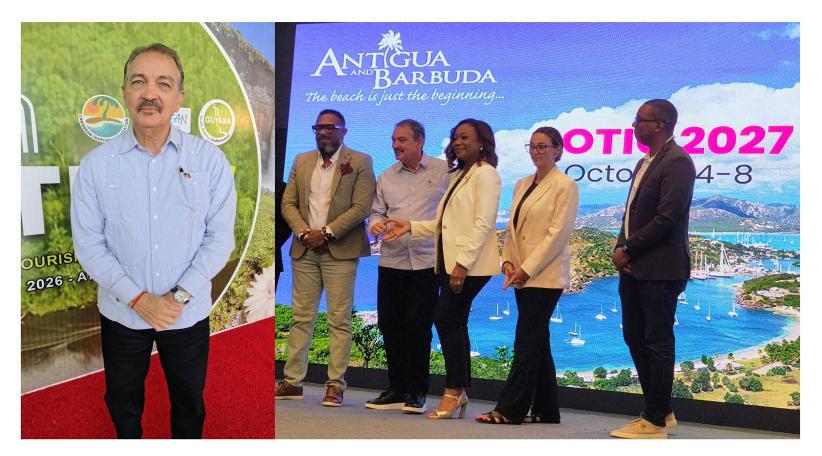
Antigua and Barbuda’s Minister of Tourism, Investment, Transportation and Aviation highlighted the importance of hosting the Caribbean Tourism Organization’s flagship conference in 2027 during an interview with ABC MUNDIAL at SOTIC 2026 in Guyana. Fernandez called for stronger regional dialogue, a review of taxes on air tickets and a higher-value tourism model that delivers greater benefits to local communities.
GEORGETOWN, Guyana – Antigua and Barbuda is preparing to host the 2027 State of the Tourism Industry Conference (SOTIC), the Caribbean Tourism Organization’s (CTO) flagship tourism gathering. The event will mark the conference’s return to a destination within the Organisation of Eastern Caribbean States (OECS) and its first edition in Antigua and Barbuda.
Speaking with ABC MUNDIAL during SOTIC 2026 in Georgetown, Minister of Tourism, Investment, Transportation and Aviation Charles “Max” Fernandez described the hosting opportunity as a chance to strengthen the destination’s international profile and demonstrate its commitment to regional tourism cooperation.
Fernandez also emphasized the value of international media coverage generated by SOTIC and its ability to showcase the Caribbean’s diversity.
“When you hear the Caribbean, somebody says, ‘I’m going to the Caribbean,’ you think it’s one place. But in actual fact, even though they’re small islands, they’re all unique,” he said.
The minister noted that Barbuda has distinctive characteristics that set it apart from Antigua, even though both islands form one destination. Hosting SOTIC in different Caribbean countries, he explained, allows international media and tourism stakeholders to discover the region’s individual destinations, landscapes and cultural identities.
Stronger political dialogue and measures to stimulate travel
Fernandez said SOTIC 2027 should help strengthen cooperation between tourism ministers and the political leaders responsible for turning regional discussions into government action.
One issue he highlighted was the possibility of reducing taxes on airline tickets, particularly during the summer season, to stimulate travel and support demand during a period with significant growth potential for Caribbean destinations.
The minister recalled that incentives were used to help restart tourism during the COVID-19 crisis. He argued that similar policy discussions require more direct engagement with prime ministers, presidents and finance ministers, whose decisions have a substantial impact on the industry's competitiveness.
Fernandez also referred to the CTO’s Reimagine campaign, which runs from 2025 to 2027. He expressed his commitment to working with the organization's Secretary-General to advance the initiative and strengthen collaboration among Caribbean governments.
Beaches, biodiversity and sustainable tourism
Describing what makes Antigua and Barbuda distinctive, Fernandez summed up the destination’s appeal with a simple phrase: “The beach is just the beginning.”
Among the island nation’s attractions, he highlighted Barbuda’s beaches, including the well-known Princess Diana Beach, with its long stretches of pink sand. He also pointed to coral reef restoration initiatives, Barbuda’s frigate bird sanctuary—home to one of the largest frigate bird colonies in the Western Hemisphere—and caves preserving thousands of years of history and Indigenous heritage.
The minister also emphasized conservation efforts on Redonda, where restoration work has helped protect threatened species and rehabilitate the island’s ecosystem.
Environmental protection is becoming an increasingly important part of the destination’s tourism strategy. Fernandez said the government was advancing measures to restrict sunscreens that harm coral reefs and marine life, reinforcing its commitment to protecting the natural resources on which tourism depends.
Hotel investment and benefits for local communities
Fernandez explained that Antigua and Barbuda is seeking to move toward higher-value tourism development that is more resilient to rising energy costs and environmental challenges.
He argued that higher-end tourism properties can support better wages and working conditions for local employees, creating broader economic benefits for the population.
At the same time, the destination aims to offer accommodation for different budgets. Fernandez cited approximately 1,800 short-term rental properties, ranging from more affordable options to high-end stays, and noted the growing importance of this segment since the pandemic.
Hotel investment, independent accommodation, environmental conservation and closer regional cooperation will all form part of the context as Antigua and Barbuda prepares to welcome SOTIC 2027.
For the destination, the conference represents an opportunity to demonstrate that the Caribbean’s tourism competitiveness depends not only on its beaches and biodiversity, but also on stronger regional partnerships, effective public policies and a development model that creates lasting benefits for local communities.