- Region:
- USA
- Category:
- Politics
Trump Renews Questions About U.S. Election Integrity Ahead of 2026 Midterm Elections
-
![Trump Renews Questions About U.S. Election Integrity Ahead of 2026 Midterm Elections.]()
Trump Renews Questions About U.S. Election Integrity Ahead of 2026 Midterm Elections.
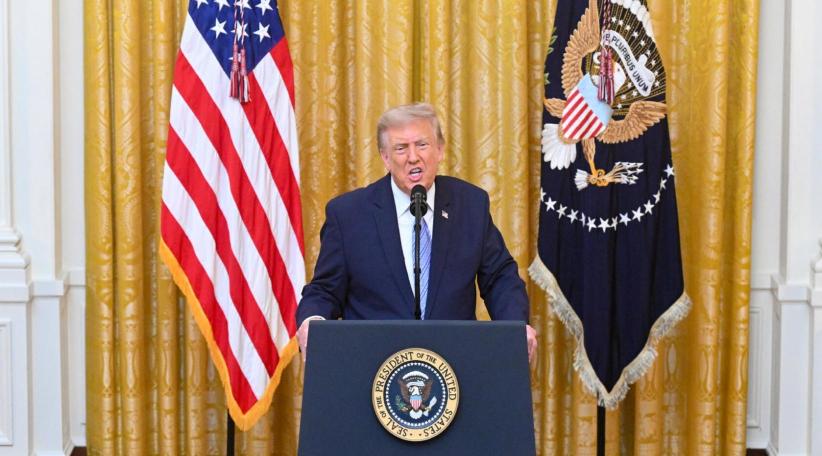
WASHINGTON, D.C. — President Donald Trump renewed his criticism of the U.S. electoral system during a nationally televised address from the White House, calling for stricter federal election laws and arguing that vulnerabilities remain within America's voting process ahead of the 2026 midterm elections.
Trump urged Congress to approve the proposed Save America Act, legislation that would require proof of U.S. citizenship and government-issued photo identification for participation in federal elections.
During his address, Trump cited recently declassified intelligence documents that he said reveal significant election security vulnerabilities dating back to 2020 and alleged that China illegally obtained data related to millions of American voters.
However, the documents released by the administration have not presented evidence showing that the outcome of the 2020 presidential election was altered.
Election Reform at the Center of Political Debate
The speech comes just months before the November 2026 midterm elections, when control of Congress will once again be contested.
Trump argued that his proposals are intended to strengthen public confidence in elections rather than undermine it, describing election security as a national priority.
Democratic lawmakers and voting rights organizations strongly oppose the proposal, arguing that stricter voter identification requirements could disproportionately affect low-income voters, minorities, and elderly citizens.
Opposition Pushes Back
Former Vice President Kamala Harris rejected Trump's claims before the speech, reiterating that the 2020 election was legitimate and noting that courts and election officials previously dismissed allegations of widespread fraud.
Democratic governors also released statements expressing concern that continued attacks on election legitimacy could weaken public confidence in American democracy.
Limited New Evidence
Political analysts noted that much of the intelligence information referenced by Trump had already appeared in previous government assessments discussing foreign efforts to gather information about American voters.
Those reports acknowledged ongoing foreign intelligence activities but did not conclude that foreign governments successfully manipulated vote counts or changed the outcome of the 2020 election.
As the 2026 midterm campaign accelerates, election integrity is expected to remain one of the most closely watched issues in U.S. politics.