- Region:
- India
- Category:
- Society
India passes 5 million coronavirus cases
-
![India’s coronavirus cases have passed 5 million, testing the country’s feeble health care system in tens of thousands of impoverished towns and villages.]()
The Health Ministry reported 90,123 new cases in the past 24 hours, raising the nation’s confirmed total to 5,020,359, about 0.35% of its nearly 1.4 billion population. India’s coronavirus cases have passed 5 million, testing the country’s feeble health care system in tens of thousands of impoverished towns and villages.
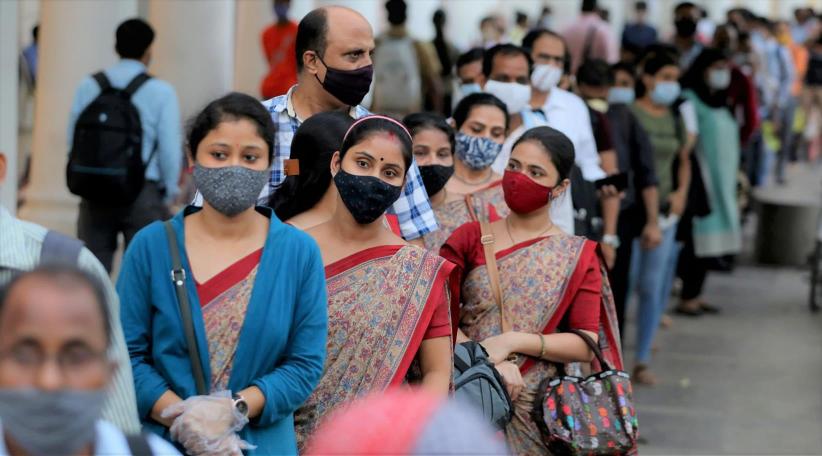
The Health Ministry reported 90,123 new cases in the past 24 hours, raising the nation’s confirmed total to 5,020,359, about 0.35% of its nearly 1.4 billion population.
India’s coronavirus cases have passed 5 million, testing the country’s feeble health care system in tens of thousands of impoverished towns and villages.
The Health Ministry reported 90,123 new cases in the past 24 hours, raising the nation’s confirmed total to 5,020,359, about 0.35% of its nearly 1.4 billion population.
It said 1,290 more people died in the past 24 hours, for a total of 82,066.
India’s total coronavirus caseload is closing in on the United States’ highest tally of more than 6.6 million cases and expected to surpass it within weeks.
The India Council for Medical Research, the country's lead pandemic agency, said last week that its survey had suggested that already in May, 6.5 million people were infected.
The same goes for deaths - 82,066 as of Wednesday, less than half the US toll of 195,000 - with many deaths not properly recorded by authorities even in normal times.
India has one the world's most poorly funded healthcare systems and the nation of 1.3 billion people is home to some of the most densely populated cities and towns.
The sharp rise in cases is despite Prime Minister Narendra Modi's government imposing in late March one of the world's strictest lockdowns, leaving tens of millions of people in the informal labor market jobless almost overnight.
The lockdown saw complete travel bans, shutting down of businesses and factories, and the flight of millions of poor migrant workers from big cities to their villages that experts say caused the virus to spread from urban centers to small towns.
India's GDP slumped nearly 24 percent in the first quarter, one of the steepest drops among major economies.
The lockdown has been steadily eased even as infections soar, with schools set to open for some classes on Monday - along with tourist hotspot the Taj Mahal.
"Initially there was a fair amount of rigor in the lockdown but subsequently there was some relaxation before it was completely lifted," K. Srinath Reddy, head of health charity the Public Health Foundation of India, told AFP.
"It sent a wrong signal to the people that possibly we have got things reasonably under control and now the economy takes precedence. The virus is now infecting more people and penetrating deeper into smaller towns."