- Region:
- USA
- Category:
- Politics
US Expands Travel Ban to 39 Countries Amid Heightened Security Concerns
![US Expands Travel Ban to 39 Countries Amid Heightened Security Concerns.]()
US Expands Travel Ban to 39 Countries Amid Heightened Security Concerns.
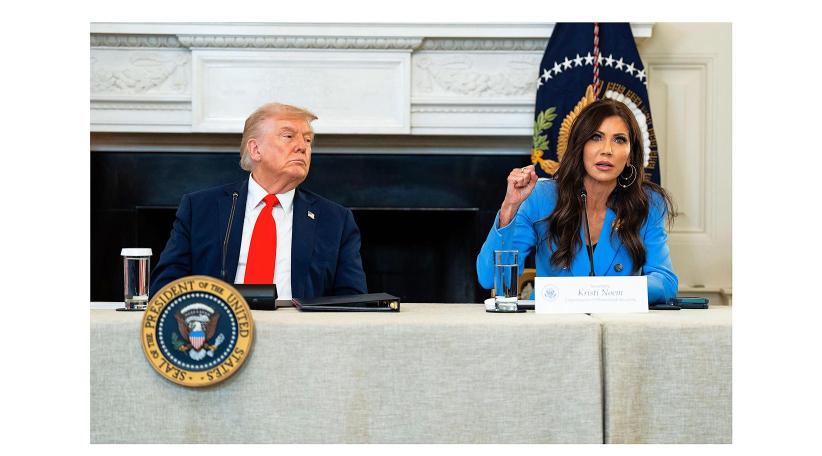
Washington, DC.— President Donald Trump has signed a proclamation significantly expanding the United States travel ban, extending full or partial restrictions to nationals from 39 countries. The measure marks a sharp increase from the previous list of 19 nations and is framed by the White House as a response to national security and immigration control concerns.
According to the proclamation, seven additional countries have been added to the list facing a full travel ban: Laos, Sierra Leone, Burkina Faso, Mali, Niger, South Sudan, and Syria. Laos and Sierra Leone were previously subject to partial restrictions, but will now face more comprehensive limitations.
In addition, the administration imposed partial travel restrictions on 15 new countries, including Angola, Antigua and Barbuda, Benin, Côte d’Ivoire, Dominica, Gabon, The Gambia, Malawi, Mauritania, Nigeria, Senegal, Tanzania, Tonga, Zambia, and Zimbabwe.
The White House stated that the affected countries exhibit “severe deficiencies in screening, vetting, and information-sharing,” which, according to officials, undermines US border security and immigration enforcement efforts. Despite the scale of the expansion, the administration noted that travelers from all fully and partially restricted countries combined account for less than 1% of total visits to the United States.
The proclamation also introduces travel limitations for individuals holding Palestinian Authority–issued travel documents. At the same time, it lifts the ban on nonimmigrant visas for citizens of Turkmenistan, while maintaining a suspension on entry for Turkmen nationals under other categories.
Exceptions to the restrictions apply to lawful permanent residents, current visa holders, specific visa categories, and individuals whose entry is deemed to serve US national interests.
The policy shift comes amid an intensified immigration crackdown by the Trump administration, following a recent shooting in Washington, DC, that left one National Guard member dead and another critically wounded. The administration has cited the incident as further justification for tightening immigration controls.
Since returning to office, President Trump has halted or sharply restricted nearly all forms of foreign entry into the US, both legal and illegal. Additional measures include a pause on asylum decisions, a review of cases approved under the previous administration, and a reexamination of certain green card holders.
The move revives echoes of Trump’s first-term travel ban, which initially targeted seven majority-Muslim countries and faced extensive legal challenges. While the policy was ultimately upheld by the Supreme Court in a revised form, it was repealed by President Joe Biden in 2021. With the latest proclamation, travel restrictions once again become a central pillar of US immigration policy under Trump’s leadership.